Wintering in Sri Lanka
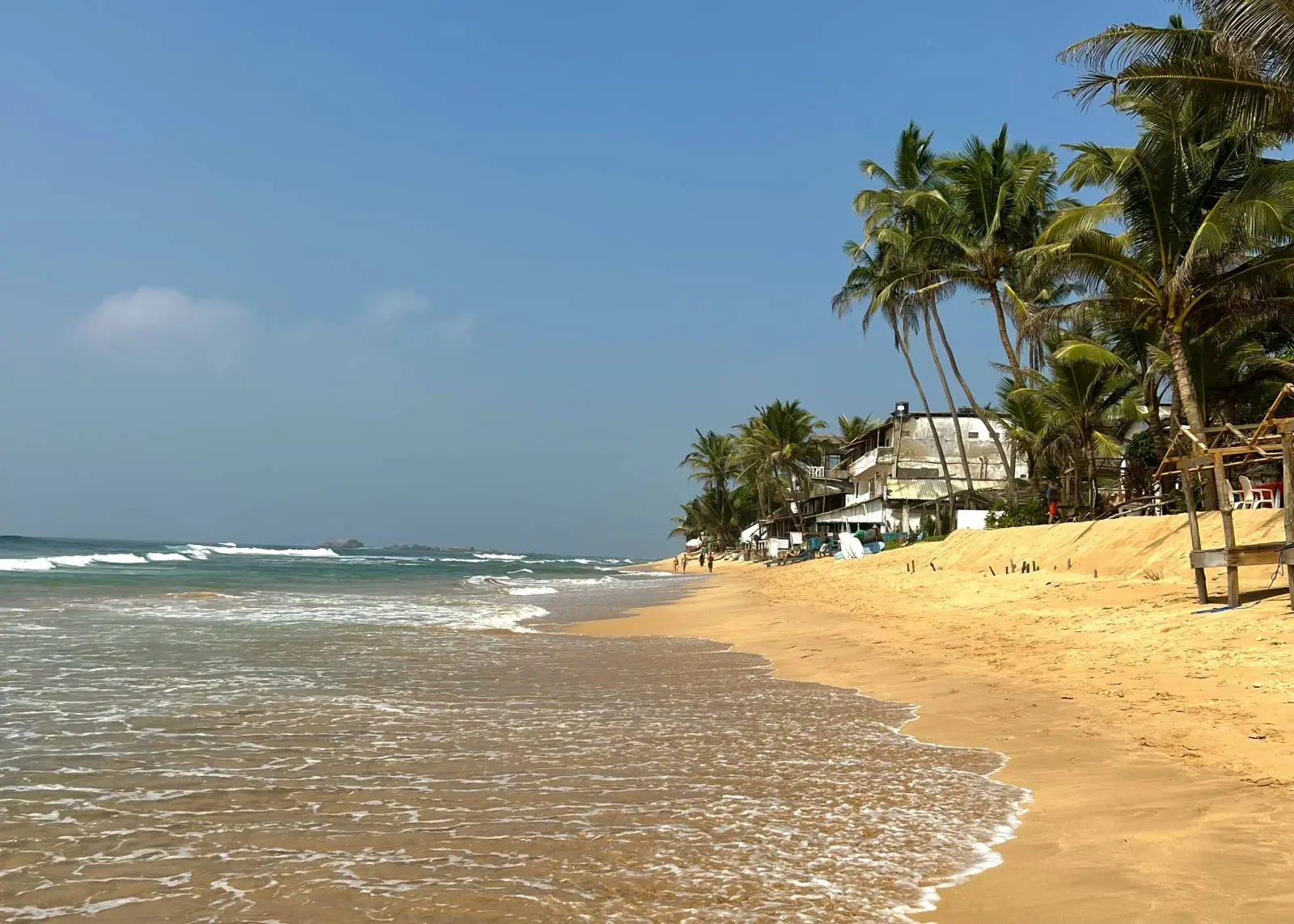
Sri Lanka is a great country for wintering. The long high season from November to April pleases with sunny weather, wide endless beaches with coarse yellow sand and a calm warm ocean. At this time, tourists from all over the world come here, international speech is heard everywhere, relaxing music and the aromas of freshly cooked seafood can be heard from coastal cafes... Sounds fabulous, doesn't it? This is not merely a postcard promise: with realistic planning, a long winter stay here can be within reach.
Do you want to spend the winter on a sunny island?
We will tell you what you need for wintering in Sri Lanka, how much to expect, what area to choose, what kind of weather it is, whether it is safe to rest with children, whether vaccinations are needed and other pressing issues. Let's look at everything in detail.
Do I need a visa for Sri Lanka?
It is better to check visa rules before buying a ticket: they depend on citizenship and may change. As of September 2, 2026, most short-term tourists apply for an electronic ETA permit before traveling. For citizens of 40 countries, including Russia, the official website lists a free tourist ETA for 30 days with double entries; for other citizens, there are their own rules and fees. Check your nationality, passport validity, and airline requirements on the official ETA website. If you plan to stay longer than a month, apply for an extension in advance through the official Immigration service: the term, documents, and fee depend on the visa and citizenship.
How much does the flight cost?
The original article used $450 per person for a return low-cost flight as a planning reference. From Moscow and from Kiev the prices are about the same, but there are promotions from $300 in both directions. You can see all possible flight options on aggregator sites: aviasales.ru, momondo.ua, etc. Before paying, check the fare rules and the compliance of the return ticket with the visa period.
Which area to choose for recreation?
There are three proven resorts that are worth considering for wintering: Hikkaduwa, Mirissa and Unawatuna. They are suitable for families with children, as well as for groups of friends, freelancers and remote workers, lovers of surfing, outdoor activities, yoga and parties.
Why these resorts:
- It has the most developed infrastructure
- There are restaurants and cafes with European cuisine
- Scooter and car rental available
- There are supermarkets and many shops with food, clothes, souvenirs
- Banks, ATMs, currency exchangers are available
- A large selection of housing in all price categories
It is also easy to get to larger cities with good hospitals and large supermarkets: from Hikkaduwa and Unawatuna to Galle, from Mirissa to Matara. From these major cities, you can take an intercity bus or train and explore the remote sights of Sri Lanka on your own.
In tourist areas, English usually helps in hotels, cafes, and transport, but the level of the language varies from person to person. It is better not to count on Russian as the working language of the service: save the address of the accommodation in English or Sinhala, download an offline map and write down the price and route in advance.
Beaches in Sri Lanka
The coast of Sri Lanka is very diverse. There are lagoons surrounded by reefs with calm water, which are ideal for swimming with children. Wide beaches where you can not only swim and sunbathe, using free sun loungers, but rent a board and go to conquer the waves. If you are a beginner, take a couple of surf lessons with an instructor from a local surf school. There are also diving schools, snorkeling and diving equipment rentals.
Along the coast, you will find offers of Ayurveda and massage parlors, many options for sightseeing tours to local attractions: river safaris, fishing, ocean walks on glass-bottom boats.
Hikkaduwa is the center of the southwest coast, with the most developed infrastructure. There is a large supermarket, fruit and fish markets, as well as a weekly Sunday market where you can buy fresh seafood, vegetables, fruits and all sorts of small things.
How much does housing cost?
It is profitable to rent housing for a month or more - many owners give a discount of up to 30% when renting for a long time, although this is not a fixed rule. It should be borne in mind that winter is the hottest tourist season, and experienced travelers book the best accommodation options in the summer. But even if you decide to go to Sri Lanka for the winter suddenly and suddenly, it is possible to find good inexpensive housing even in the high season - contact us, we will definitely select something for you from various options. You can get acquainted with all our offers for housing in Hikkaduwa, Unawatuna and Mirissa on the srilanka.anilau.com website.
If you are interested not only in vacation and not only in winter, be sure to read our article "Live and work by the ocean". It is about what the low season in Sri Lanka is, what is better to live on an island than in the city, prices for accommodation and food, and how to spend this time most profitably.
Let's go directly to the options and pricesOn the second or third line, you can rent a nice Sri Lankan house for 4-6 people for $600-900 per month. Usually such houses do not have air conditioning, there are 2-3 rooms with bathrooms, a kitchen and a small green courtyard. Apartments for 2-3 rooms will cost about the same.
For a large company, a private villa is suitable. These are large, sometimes two-storey houses for 6-8 people. The cost is from $1500 per month.
For couples and single travelers, guesthouse rooms and hostels are better suited. In our villa, we rent cozy rooms from $300 per month for two, there is also a family room for 4 people. A new hostel has also been built on the territory - a shared room for 6 people.
How much money do you need for food?
Eating in cafes will cost about $10-15 per day for two. In tourist restaurants with European cuisine, it is about 2-3 times more expensive. If you cook yourself, then for two you will get about $250-300 for groceries per month. We leave these figures as a guideline: the budget changes noticeably due to seafood, imported products, the season, and how often you choose tourist cafes.
Tours & Transportation
A three-day tour for two will cost about $500 (all inclusive).
Car with driver $55 per day
Scooter rental from $8 per day
Public transport — 5 rubles in the city
These are the guidelines of the original article: the price depends on the route, season, fuel, insurance and included services. For a car with a driver, agree on the mileage, expectation and final price in advance; for a scooter, check the helmet, insurance, documents and the condition of the vehicle.
Medicine
The quality of medical care in Sri Lanka is not bad. If you go to a private clinic, it is clean, good laboratories, queued rooms, friendly staff speaks English, clean rooms with air conditioning. A doctor's appointment cost an average of $15; this is an old guideline of the author, so check the current price and the language of the staff with the selected clinic. Keep in mind that doctors may be 30-60 minutes late. There are two well-known private clinics in Galle – Hemas and Ruhunu; they have websites with contacts. There are also municipal clinics: treatment may be cheaper, but the wait and conditions vary markedly.
We recommend that you take out insurance in your country. In case of anything, you can call the insurance company, they will contact a private hospital in the nearest city and make an appointment time. Keep the emergency medical number 1990 and the insurer's contacts; if you have severe symptoms, do not treat yourself. Before traveling, discuss vaccinations and mosquito protection with your doctor: dengue remains a relevant risk.
Is it safe here?
Sri Lanka is generally convenient for tourists, but there are no absolutely safe places. In resort areas, geckos are often found in houses, sometimes beetles fly in and spiders enter. Usually they do not pose a problem, but it is better not to touch unfamiliar animals and seek medical help in case of a bite or allergic reaction.
Often, visitors to Sri Lanka for the first time have fears of getting acquainted with the national cuisine. Put aside unnecessary doubts, but keep the usual road caution: in many cafes, food is cooked fresh, but this cannot be guaranteed in every place. Choose hot dishes, keep your hands clean and do not consider tap water to be drunk everywhere; it is safer to use bottled or reliably filtered water. Bottled water is sold in every shop. In our guesthouse and hostel, free filtered water is always available for guests.
Is it safe for girls to travel alone in Sri Lanka? In resort towns, yes, although annoying attention can cause discomfort. Of course, banal caution and common sense have not been canceled - it is better not to walk alone in dark alleys at night. Get ready for the attention of Sri Lankan men, even if you are also a man. They are sociable and quite clingy. They will want to get to know you, talk "for life" and so on. Keep in mind that there are also beach alphonses: do not transfer money and do not hand over documents to new acquaintances.
Scammers. Study the order of prices for taxis, tuk-tuks, services, goods from beach sellers. Often there are those who do not mind making money on freshly arrived tourists by voicing a price tag 2-3 times higher than the standard one.
Crime. There is no exact universal figure for comparing crime here: in resort areas, you can walk along busy streets, but late at night it is better to stick to illuminated routes and use reliable transport. In a controversial situation, contact the police or an insurer, and not a random "assistant". But still, do not leave your bag with equipment and a plump wallet on a deserted beach, especially if there are documents in the bag.
Weather in Sri Lanka
Friends, Sri Lanka is an island with a warm climate. All year round, it is often about +30°. The humidity is high, but after the city dust, many people find it pleasant; after a few days, you usually adapt to it. Precipitation is often short-lived, but this is not a guarantee of dry weather every day.
In different months, the weather differs markedly along the coasts: for the southwest, December and February are usually chosen in winter, and from May to September, the southwest monsoon often brings rain and waves to the west and south. In October-November, heavy showers are possible. Before the trip, look at the forecast for your area, and not just the average values for the island.
WavesSri Lanka is surrounded by the ocean. The ocean is an element, and waves are its normal phenomenon. Resorts were created in places where the coast is surrounded by reefs or there are peculiar bays. In these regions, the water can be calmer, and you can often swim in high season. But in summer, there are strong reverse currents in the south, so you should not go deep into the water. Do not expect that there is always a coast guard and lifeguards on every central beach. Look at the flags, check about the reverse currents, do not go deep alone and do not swim after alcohol or in the dark.
Summing up all of the above, we want to say once again - friends, come to Sri Lanka for the winter! We hope that we have convinced you that it is comfortable, tasty, safe, diverse - and most importantly, budget-friendly! - you can spend time. And you are already monitoring sites in search of convenient tickets for the next dates :)
What to check in the first days of wintering?
Do not rush to pay for accommodation, a scooter or an excursion for the whole month on the first day. Give yourself two or three days: walk to the beach and the store at different times, assess the noise, communication in the room, the operation of the air conditioner, the quality of water and the road after the rain. Write down the real expenses for groceries, cafes, water and transport – this way your personal budget will be more accurate than any general calculation.
For a long trip, copies of your passport and insurance, a backup payment method, repellent, a small first aid kit, an adapter, and an offline card are useful. Those who work remotely should ask the owner to show the Internet speed in the room and find a spare café or coworking space in advance. For families with children, the most important thing is shade, convenient access to the water, proximity to the clinic, and the ability to cook familiar food; even a calm bay and pool are no substitute for constant supervision.
Sources: official ETA; visa extension; Sri Lanka Tourism — weather; FCDO — health and insurance.
Read also
All articles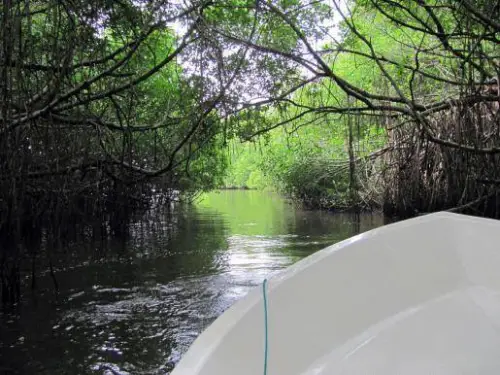
Holidays in Bentota, Aluthgam, Beruwell. Beaches and attractions.
When the river meets the Indian Ocean, it's already a miracle. And if this river is located in a resort village, then pack your bags.…
Healing Ayurvedic tea for colds Samahan
Samahan tea has 14 different plants in its composition, which are collected in the most ecologically clean regions of beautiful Sri Lanka, on the world…
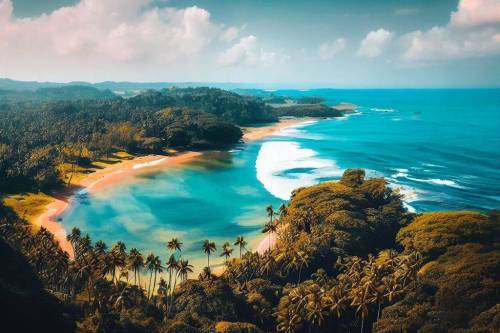
10 Little-Known Facts About Sri Lanka: History, Nature and Tea
From a tree with a historically known planting date to Minneriya’s ancient reservoir: ten checked facts about Sri Lanka’s nature, history, languages and tea, without…

Internet in Sri Lanka
How to choose a SIM/eSIM and internet in Sri Lanka: current Dialog and SLT-Mobitel plans, checking Wi-Fi in accommodation and a backup for remote work.
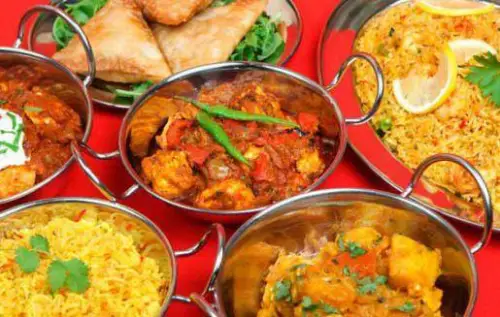
Sri Lankan cuisine: dishes to try and practical food tips
What to try in Sri Lanka: rice and curry, hoppers, kottu, sambols and seafood, with practical advice about heat, restrictions and hygiene.
Sri Lanka Trains: Routes, Tickets, and Carriage Classes
A practical guide to travelling by train in Sri Lanka: scenic lines, carriage classes, current schedules and fares, reservations, luggage and connections.

Comments
Share your thoughts or ask a question about this article.