Older lists about Sri Lanka often combine genuine history with attractive but overconfident claims: “the biggest”, “the best in the world”, fixed wildlife numbers, or a promise that every train ride will be perfect. Here are ten facts that help explain the island more accurately. The impressive part remains, but confirmed information is separated from legend and from experiences that change with weather, season and local rules.
- Anuradhapura has a tree with a historically known planting date
Jaya Sri Maha Bodhi is a sacred fig tree in the ancient city of Anuradhapura. Sri Lanka Tourism describes it as the world’s oldest historical tree; tradition connects it with a cutting of the Bodhi tree in India, and its planting is placed in the third century BCE. It is safer to understand this as a living tree with an exceptionally long documented religious history, rather than as “the oldest tree on the planet” without qualification. This is an active place of worship, not just a sightseeing stop. Dress respectfully and ask before photographing people or ceremonies. - The world’s first female head of government came from Sri Lanka
Sirimavo Bandaranaike became prime minister on 21 July 1960. The Parliament of Sri Lanka identifies her as the world’s first female head of government. That is a specific historical milestone, not a claim that the country solved every question of equality or that current politics can be described by one event. Her name still appears in streets, public buildings and historical material. If you want to include political history in a trip, check museum opening hours and official visitor rules instead of relying on an old guidebook. - The island has eight UNESCO World Heritage properties
UNESCO’s current country page lists eight properties for Sri Lanka: six cultural and two natural. They include the ancient cities of Anuradhapura, Polonnaruwa and Sigiriya, Galle’s old town, the sacred city of Kandy, Dambulla cave temple, Sinharaja Forest Reserve and the Central Highlands. This is not a ranking of the eight “best” places and UNESCO status does not guarantee that every site fits a short itinerary. It signals international value and conservation responsibilities. Before visiting, check access, opening arrangements, photography restrictions and local temple etiquette. - Sinharaja is a rare remnant of primary tropical rainforest
UNESCO calls Sinharaja the last viable area of primary tropical rainforest in Sri Lanka. More than 60% of its trees are endemic, and the reserve contains a large share of the island’s endemic mammals and butterflies. A visit is therefore not a walk through a park where a particular animal is guaranteed. It is an encounter with a protected forest ecosystem. Use an authorised entrance, wear shoes suitable for wet ground, carry rain protection and leave time for a slow route. Do not promise yourself a rare bird or mammal: sightings depend on weather, trail and quiet behaviour. - The Central Highlands form a separate natural world, including an endemic leopard
The UNESCO property called the Central Highlands of Sri Lanka includes Peak Wilderness Protected Area, Horton Plains National Park and Knuckles Conservation Forest. The mountains rise to about 2,500 metres, and UNESCO describes the forests as a super biodiversity hotspot. They provide habitat for the endemic Sri Lankan leopard, Panthera pardus kotiya. This is impressive, but it does not turn a visit into a safari with guaranteed sightings: leopards are elusive and parks have conservation rules. Check the forecast and trail conditions, stay on marked routes and never approach wildlife for a photograph. - The pangolin is the only mammal with true scales
Sri Lanka’s Department of Wildlife Conservation describes the Indian pangolin as an animal whose body is covered with movable scales. In Sri Lanka it occurs from lowlands to roughly 1,100 metres, is mainly solitary and nocturnal, and feeds on termites and ants. Its armour is also its danger because the scales drive illegal trade. Seeing a pangolin during an ordinary trip is unlikely, and that is a good reason not to search burrows, touch wildlife or support animal shows. The fact is most useful as a reminder that the island’s natural heritage is vulnerable. - Minneriya’s Elephant Gathering is linked to an ancient reservoir
Minneriya National Park protects the catchments of several ancient irrigation reservoirs, including Minneriya Tank, built under King Mahasen in the third century CE. During the dry season, water recedes and fresh grass appears on the banks, attracting elephant herds from surrounding parks. This is the famous Elephant Gathering. Numbers change with rainfall, water levels and movement between parks, so promising to see “300 elephants” is not responsible. Plan a safari with an authorised operator, keep a safe distance and never feed the animals. - Ceylon Tea began with a small commercial plantation
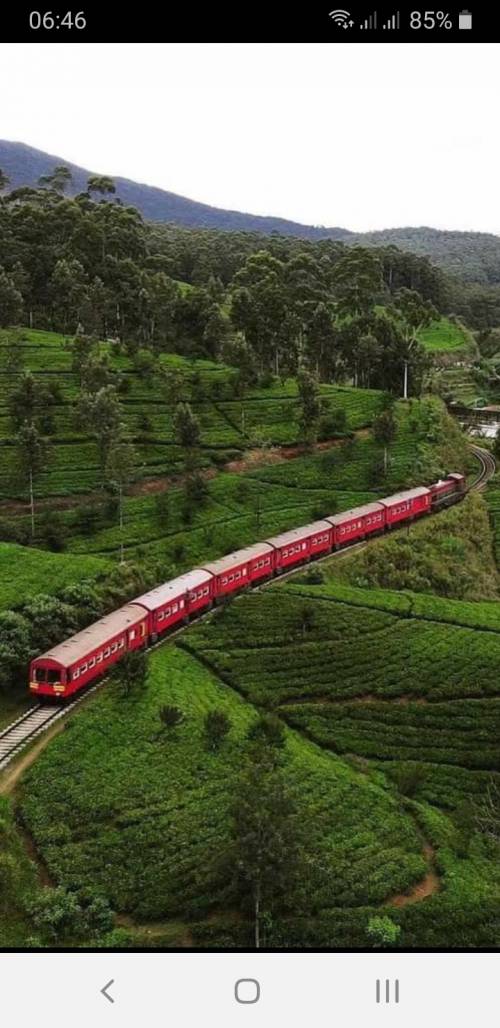
Sri Lanka’s first commercial tea plantation was established by James Taylor in 1867 on 19 acres at Loolecondera near Kandy. That is more useful than saying Sri Lanka produces “the best tea in the world”: flavour depends on region, elevation, processing and personal taste. Ceylon Tea is not simply any tea sold on the island. Under Sri Lanka Tea Board rules, tea using that legal distinction must be grown and manufactured entirely in Sri Lanka and meet the Board’s standards. When buying tea, look at origin, packaging and the Lion mark rather than relying on a grand slogan. - Dambulla has five cave shrines and thousands of square metres of murals
Rangiri Dambulla Cave Temple is a living Buddhist pilgrimage site with a history of more than two millennia. UNESCO highlights five cave shrines, 157 statues and about 2,100 square metres of Buddhist murals. Dambulla is therefore more than a quick stop on the way to Sigiriya: it is an active religious complex. Quiet behaviour, covered shoulders and knees, removing shoes where requested and not touching painted surfaces matter. Opening arrangements and photography rules can change, so verify them locally rather than copying an old blog. - The country has two official languages and a link language
Sinhala and Tamil are Sri Lanka’s official languages, while English is designated as the link language. This is set out in material from the Ministry of Justice and the Official Languages Commission. Place names, road signs and some announcements may appear in all three languages, but that does not mean every driver or official speaks fluent English. Save an address in Sinhala or Tamil, check the spelling of a station or town and do not interpret a language barrier as rudeness. A few simple local words are often more useful than broad tourist stereotypes.
How to use these facts when planning. Historical sites can be combined into a Cultural Triangle route, while forests and highland parks need extra time, suitable access and weather flexibility. Tea country should not be planned like a beach stop: the hills are cooler and conditions can change quickly. For safaris, hikes and temples, check current rules, transport and forecasts before leaving. Prices, timetables, permits and animal counts are not permanent characteristics of a country. The trip will be more honest if it leaves room for rain, mist, a closed section or a slower road.
Sources checked on 3 September 2026: Sri Lanka Tourism — Jaya Sri Maha Bodhi, Parliament of Sri Lanka — women in Parliament, UNESCO — Sri Lanka World Heritage properties, UNESCO — Sinharaja, UNESCO — Central Highlands, Department of Wildlife Conservation — protected species, Sri Lanka Tourism — Minneriya National Park, Central Bank of Sri Lanka — history of Ceylon Tea, Sri Lanka Tea Board — Ceylon Tea, UNESCO — Dambulla cave temple and Department of Official Languages.