Sri Lankan cuisine: dishes to try and practical food tips
I want to tell you about the difference between food prepared for tourists and everyday Sri Lankan cooking, and about the way sweet, sour, salty and hot flavours can appear in one meal. After several visits and then a long stay with children, we realised that Sri Lankan food is not one fixed menu. It is a broad home and restaurant tradition in which rice, coconut, spices, vegetables, fish and fruit come together differently every day.
Our first visit was a one-week package holiday. The hotel offered the familiar tourist choice of meat, side dishes, cream soups, fruit and desserts. Everything was delicious, but we saw little of the island’s everyday food. Later we stayed for several months in guesthouses and with families, and eventually brought our children and stayed longer. Ordinary cafés, homes and small eateries showed us how much an adapted tourist menu can differ from home cooking.
Tourist food and local food
In resort towns, restaurants often adapt dishes for visitors: they reduce the chilli, add familiar salads, soups, pasta, pizza and breakfast options. That is not “fake” food; it is a practical compromise. You do not have to look for local cuisine in a place where no foreign visitor has ever been. Rice and curry, kottu, hoppers, roti and short eats are also found in ordinary cafés near tourist areas.
The difference is usually the recipe, heat level, portion size, choice of meat or fish and presentation. A tourist restaurant may explain the ingredients and accept a request for less chilli. In a small local place the menu may be only in Sinhala or Tamil, but you can point to food on display. In either setting, ask what is in the dish rather than treating its name as a complete guarantee.
Main ingredients and flavours
Rice, coconut, chilli, curry leaves, onion, garlic, ginger, turmeric, coriander, cumin, fennel, cinnamon and other spices are familiar foundations of Sri Lankan cooking. Spices do not mean that every dish is equally hot. Fresh or dried chilli, pepper mixtures, sambols and separate sauces create the heat, and the same curry can taste different in two homes.
Sweet and hot flavours really do sit comfortably together. Pineapple, mango and other fruit may be served with salt, chilli and lime. There are sour and hot chutneys, coconut sambol with onion and chilli, and sweets based on coconut, sugar, palm syrup and fruit. The contrast may seem surprising at first, but it is part of what makes the cuisine memorable.
Rice and curry
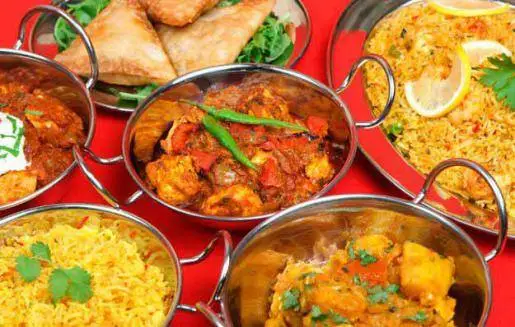
The best-known meal is rice and curry: rice with several accompaniments. A plate may include rice surrounded by small portions of vegetable, dhal, fish or meat curry, greens, sambol, pickles and papadum. The selection changes with the household, day and available ingredients. “Curry” is therefore not one sauce but a family of dishes made with different products and spice combinations.
Dhal curry, often made with red lentils and coconut milk or spices, is common. Other versions use potato, eggplant, green banana, pumpkin, beans, beetroot or okra. Fish and chicken can be cooked in a mild coconut sauce or a stronger spice mixture. In home cooking, meat does not have to be the centre of the plate; several vegetable curries can be more important than one large piece of protein.
Rice and curry may be eaten with the hand or cutlery, depending on the place and the person. If you want to eat with your hand, wash first and use the right hand; asking for a spoon is perfectly fine. You do not need to mix everything at once. Start with a little rice and one curry so you can understand the flavour and heat.
What else to try
- Hoppers, appa. Bowl-shaped pancakes made from rice batter and coconut milk, crisp at the edges. Plain, egg and sweet versions are common.
- String hoppers, indi appa. Fine steamed rice-flour nests served for breakfast or dinner with dhal, curry and coconut sambol.
- Kottu roti. Chopped flatbread with vegetables, egg, meat, fish or cheese cooked on a hot griddle. The rhythm of two metal spatulas is part of the street-food experience.
- Roti and pittu. Roti can contain coconut or other fillings; pittu is made with rice flour and coconut and served with curry.
- Kiribath. Rice cooked with coconut milk and usually served in pieces with lunu miris, sambol, banana or sweet accompaniments.
- Short eats. Cutlets, patties, fish buns and other small snacks that are convenient for a journey.
- Seafood. Coastal menus often include fish, prawns, crab and squid. Ask how the portion and weight are calculated and judge freshness at the particular venue.
For dessert, try wattalappam, buffalo curd with palm syrup, bananas, coconut sweets and seasonal fruit. Different regions and communities have their own dishes and festival foods. Sri Lankan cuisine also reflects Indian, Tamil, Muslim, Malay, Dutch and other influences, so it cannot be reduced to one recipe called “curry”.
Ordering when you do not eat much chilli
Say that you need mild food and repeat it for each dish, not only for the whole order. Ask for no added chilli and for sambol to be served separately. In some places “medium” will still be very hot for someone who is not used to it. Start with rice, dhal, a coconut-based dish, hoppers or a vegetable curry, then move to stronger flavours.
Water does not always remove the burning sensation, so ordering the hottest dish as a challenge is not useful. Rice, coconut-based sides and mild accompaniments can make one portion easier, but people react differently. If you feel unwell, stop experimenting. For a child, choose a simple dish with a clear ingredient list and separate rice rather than assuming an adult dish will be suitable.
Vegetarian dishes and restrictions
Vegetarians can usually build a meal from rice, dhal, several vegetable curries, greens, sambol and papadum. But “vegetable” does not always mean vegan: a dish may contain dairy, fish, dried prawns or an animal-based sauce. Ask about every curry and its preparation if this matters. Separate utensils and no cross-contact cannot be assumed in a small kitchen, so people with allergies should explain them in advance and choose a place that can answer clearly.
Hygiene and food storage
The statement that Sri Lankan people “never put anything in a refrigerator” is too broad and should not guide a traveller. Home and restaurant practices vary, and perishable food needs safe storage. Choose a place with good turnover, clean service and understandable storage. Hot food should be properly hot; avoid food with a questionable smell, temperature or date. Sri Lankan food-hygiene rules separately regulate the storage temperature of cooked perishable food, so one household observation cannot be applied to the whole country.
Raw salads, cut fruit and ice depend on the water, cleanliness and conditions of the particular place. When unsure, choose fruit you can peel and food cooked thoroughly, and drink safe water. This is not a reason to fear local cuisine; it is simply a reason to watch turnover and hygiene.
Tea, bread and familiar food
Tea with milk and sugar is common, but people do not all drink it equally sweet. Ask for less sugar or no milk if you prefer. Bread, soups and salads exist throughout the country, especially in cities, hotels and restaurants; they simply are not always the centre of a traditional home meal. For a familiar breakfast, look for a bakery, café or supermarket. To explore local food, start with a small plate of rice, dhal, vegetable curry and one sambol.
What to take home
Good edible souvenirs include papadum, tea, spices, coconut sweets and products made with cinnamon, pepper, cardamom or vanilla. Check the ingredients, date, packaging and import rules for your country. Start with small packs because spices are aromatic and blends may contain salt, flour or other additions. If you want Ceylon cinnamon, look for clear origin and labelling rather than only the word “cinnamon”.
For a budget reference, see the separate article on food prices in Sri Lanka, remembering that market and restaurant costs vary by season, district and venue.
Conclusion
Sri Lankan cuisine can be very hot, but its character is not only chilli. It is rice and dhal, coconut and greens, fish and vegetables, crisp hoppers, noisy kottu, sour sambols, sweet fruit and many home variations. Try small portions, ask about ingredients and heat, respect local habits and judge food by the actual conditions of the place. Then the island’s cuisine becomes one of the brightest parts of the trip rather than a test of endurance.
Sources: Sri Lanka Tourism — So Rich In Flavours; Sri Lanka Tourism — Food; Sri Lanka Export Development Board — spices and condiments; Sri Lanka Food Hygiene Regulations.
Read also
All articles
Sri Lanka entry rules in 2026: ETA and documents
Current Sri Lanka entry rules: ETA, the 40-country free tourist regime, documents, fees, transit and visa extensions checked on 3 September 2026.

What to bring to Sri Lanka as a gift for locals
A practical guide to gifts for Sri Lankan hosts, families and colleagues: food choices, dietary preferences and customs restrictions.
Food prices in Sri Lanka: current retail examples and a practical guide
Concrete retail examples for rice, vegetables, fruit, eggs, meat and fish in Sri Lanka, with ranges, averages and a practical note about Hikkaduwa.

How to Attract Customers Through Influencers in Sri Lanka: Using Promo Listings
A practical guide for Sri Lankan businesses and creators looking for relevant promotion partnerships.

Wintering in Sri Lanka: Areas, Budget, Visa and Daily Life
A practical plan for wintering in Sri Lanka: legal status, coast, housing, costs, internet, health and safety.

Internet in Sri Lanka
How to choose a SIM/eSIM and internet in Sri Lanka: current Dialog and SLT-Mobitel plans, checking Wi-Fi in accommodation and a backup for remote work.






Comments
Share your thoughts or ask a question about this article.