Sri Lanka’s administrative capital is Sri Jayawardenepura Kotte. Many travellers still use the simpler word Colombo when speaking about the capital, but the precise distinction matters: Colombo is the country’s largest city, commercial and business centre, while Kotte is the administrative capital. For a traveller, this affects route planning, visa errands and where to stay after a flight.
Colombo is Sri Lanka’s main urban hub. Offices, shops, universities, medical and everyday services, restaurants, the port, railway connections and buses are concentrated here. You can find products and services that are less common in smaller towns, including imported food, familiar goods, technology and European-style restaurants. A capital-sized city is not equally convenient or peaceful in every neighbourhood, however.
Capital or commercial centre?
Official Sri Lankan sources distinguish the two cities: Sri Jayawardenepura Kotte is the administrative capital and Colombo is the commercial capital and largest urban centre. Parliament is in Kotte, next to Colombo, while most practical activities visitors associate with the capital happen in Colombo. When booking accommodation or transport, search for a specific neighbourhood rather than relying only on the word “capital”.
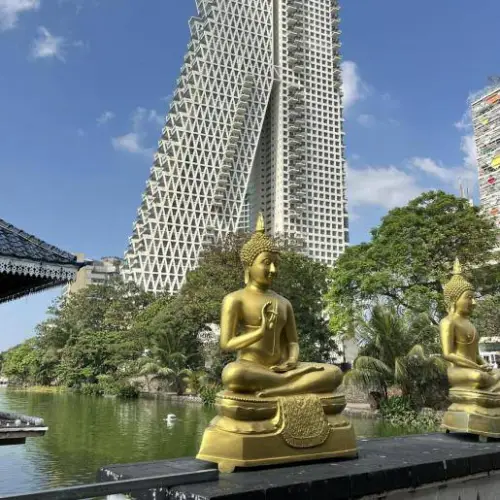
Colombo does not have to be a mandatory stop just because of its formal status. It is a useful arrival and departure point, a place for shopping, documents, connections and an introduction to modern Sri Lanka. There is less island nature here than in the hills or on the coast, but the city shows colonial buildings, business districts, temples, markets, the port and new urban projects side by side.
Transport
Colombo is the island’s largest transport hub, but this does not mean that every route meets at one station. Colombo Fort is the main railway reference point. Trains from here and nearby stations serve the south, north, east and inland routes. Some connections require a change of station or a check of the exact end station.
Check the route and fare for your date through the official Sri Lanka Railways service. It shows direct and connecting trains, times, available classes, train numbers, distance and ticket prices. Old names of commercial trains and old guidebook prices should not be treated as current without checking. Second- and third-class tickets are often handled at stations, while reserved seats follow separate availability and booking rules.
Large bus points are found around Fort and Pettah, but there is no single terminal for every destination. Before boarding, confirm the final stop, route number and the exact place from which your bus leaves. Tuk-tuks, taxis and ride-hailing apps are useful for shorter trips, but traffic, rain, road closures and rush hour can change the journey completely. Leave a real margin between connections.
Colombo airport
A flight sold as Colombo usually arrives at Bandaranaike International Airport (BIA), in Katunayake about 32 kilometres north of the city. This is not central Colombo. Your first-night choice therefore depends on arrival time and the next leg of the trip: after a late flight, staying near the airport may be practical; before a morning connection into the city, you may prefer Fort or another chosen neighbourhood.
The airport’s official guide lists bus, train, taxi, Uber and PickMe options and specifically mentions the 187 Airport–Colombo Fort luxury bus via the expressway. Do not promise a fixed travel time: traffic and road conditions decide the result. Check the stop, payment method and service availability when you arrive.
If you need to extend a visa
The old article said that a tourist visa could be extended in Colombo and only in one place. The safer current reference is the Department of Immigration and Emigration in Battaramulla, near Colombo, together with its official online extension service. Eligibility, period, documents and fees depend on visa type and nationality, so the same result cannot be promised to every traveller.
The Department lists a valid passport, photograph, accommodation address and telephone number, and a return air ticket among the tourist-extension requirements; applicants making an in-person submission must attend themselves. Apply before the authorised stay ends and use only the official links. Trying to submit through an incorrect website does not itself extend your stay or remove possible penalties.
Accommodation and neighbourhoods
Accommodation in Colombo is often more expensive than in smaller towns, but a higher price does not automatically mean higher quality. The difference may reflect the neighbourhood, demand, view, lift, backup power, internet and distance from offices or the sea. Check the map, noise, access road, water, facilities and cancellation policy rather than relying only on room photographs.
Fort and Colombo 01 are useful for the railway station, port, business meetings and a first walk. Colombo 03 and Kollupitiya give quick access to central streets and the waterfront. Colombo 07, Cinnamon Gardens and nearby areas may suit visitors who prefer greenery and a calmer rhythm. These are orientations, not quality guarantees: the exact street and property matter more than the label.
Colombo has poor neighbourhoods and quarters with expensive villas. They coexist in a striking contrast. A basement eatery may stand beside a polished office building, with managers in expensive suits and shopkeepers eating at the same tables. Nobody seems particularly worried about the contrast, and that is part of the city’s character.
People and atmosphere
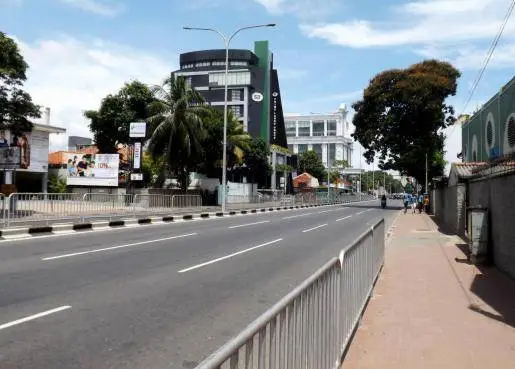
Colombo is Sri Lanka’s light version of Moscow. Life is busy: broad roads, office towers, noisy streets and heavy traffic. People come here to study and work from many parts of the island, so the city feels more diverse than a small resort. Avoid turning that diversity into stereotypes; a neighbourhood, time of day and particular situation tell you more than a generalisation about its residents.
The city suits travellers who want shops, food, museums, temples and urban energy. Visitors seeking silence, jungle and a car-free beach may find it tiring. My overall impression remains similar: I would not stay here for a long time, but one or two days are justified for seeing Colombo and dealing with practical matters.
Ocean and Colombo beaches
Colombo is on the ocean, but its urban waterfront is not automatically a swimming beach. Galle Face Green is an open seaside space for walking, kite flying, sunsets and street food. Some sections have walls and steps rather than ordinary beach access. Waves, currents, crowds and the lack of familiar beach facilities make it a poor place for careless swimming.
If you want to swim, choose a specific beach according to that day’s conditions, ask local lifeguards or instructors, and stay out of restricted or dangerous water. A calm-looking surface from the promenade does not guarantee a safe bottom or current. Galle Face is excellent for a walk, but it should not be sold as a beach holiday beside Fort.
What to see in one or two days
Start in Fort: colonial buildings, port streets, the Old Parliament area from outside and modern offices show several eras of the city together. Then walk through Pettah, a busy shopping district with markets and small stores. Go without trying to see everything, keep an eye on your belongings and decide in advance what you actually want to buy.
In the evening, choose Galle Face Green and the waterfront. On another day, visit the National Museum, Independence Square, Viharamahadevi Park or Gangaramaya Temple, following local clothing and behaviour rules at religious places. If you are interested in the new skyline, check the current access rules for the Marina at Port City Colombo. Hours, tickets, photography restrictions and access can change.
Food is another reason not to spend the whole day in a shopping mall. Try kottu, hoppers, rice and curry or a street snack from a busy, well-kept place, while considering your tolerance for spice. Colombo also has restaurants serving familiar European food when you want a break from rice and curry.
A simple trip plan
- Only a connection: check the road time from BIA, avoid a long city tour between flights and leave a margin for traffic.
- One day: Fort, Pettah, Galle Face and one selected museum, temple or park. Do not try to cross the whole city.
- Two or three days: add the National Museum, Independence Square, a slower walk in Colombo 07 or a checked excursion; keep one block of time for documents, shopping or rain.
Save your accommodation address, booking number, flight details and the official service you need. Check railway routes and fares for the date, visa requirements for your permit type, and sea conditions at the exact waterfront. Bring light clothing for sun and rain, comfortable shoes and more time than the map seems to require.
Colombo does not need to be Sri Lanka’s most exotic place to be useful and interesting. It is a city of errands, connections, food, contrasts and first impressions. Come not only to extend a visa or buy souvenirs, but also to walk through Fort, Pettah and Galle Face. The important thing is to distinguish the commercial capital from the administrative one, the airport from the city centre, the waterfront from a swimming beach, and old advice from current rules.
Sources: Ministry of Foreign Affairs — national profile and capitals; Sri Lanka Government — country overview; Colombo Municipal Council — city profile and Galle Face Green; Sri Lanka Tourism — things to do in Colombo; Bandaranaike International Airport — transport to and from the city; Sri Lanka Railways — schedules and fares; Department of Immigration and Emigration — tourist visa extension; official online visa extension service. Recheck transport, visa requirements, opening hours and access conditions before travelling.