Colombo: what to see in 1-2 days, areas, transport and a useful route
Colombo is Sri Lanka's largest commercial and financial center on the west coast. The official legislative capital of the country is Sri Jayawardenepura Kotte, so it is better not to repeat the old definition of "Colombo is the capital" without clarifying. The city is worth seeing not for the "perfect tropical resort", but for the mixture of port history, markets, religions, modern business environment and urban food. You can spend a busy day in Colombo, and two days give you time to move without a race.
How the city works and where to stay
Colombo is made up of neighborhoods with different moods. The Fort and Pettah are convenient for history, markets, and a short walk route; Colombo 3–7 is for cafes, museums, parks, waterfronts, and hotels; Mount Lavinia is located further south and is more suitable for those who care about a beach evening rather than proximity to the center. Don't choose accommodation just by saying "near the ocean": travel time during rush hours, noise, access to restaurants and the places you need are more important than the line on the map.
Bandaranaike International Airport is not in the center of Colombo. For the first or last night, many travelers choose Negombo; if you want museums, markets, and city life, it makes sense to go to Colombo. Allow plenty of time for traffic and don't rely on old articles with fixed travel times or bus schedules.
One-day itinerary
Morning: Fort and Pettah Start in the Fort district, where modern offices, colonial buildings and transport hubs coexist nearby. Then go to Pettah – a bustling market with fabrics, spices, fruits, electronics and street food. This is not a "landmark to be beaten": keep an eye on things, ask for a price before buying, do not take pictures of people and religious places without permission. If you want to be quieter, limit yourself to one or two streets and a coffee break.
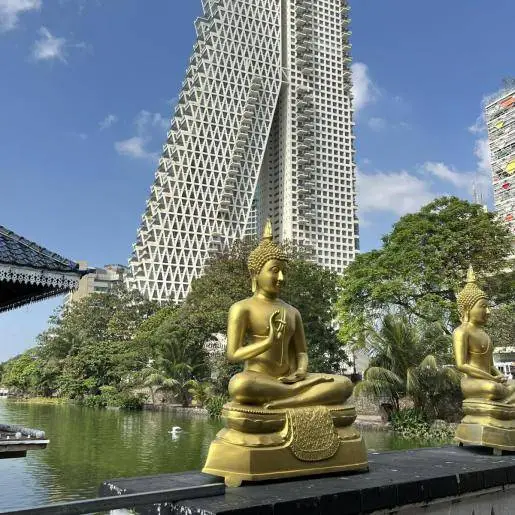
Day: temple, museum or park. Sri Lanka Tourism recommends the National Museum, temples and city walks in Colombo; next to the museum is Viharamahadevi Park, the oldest and largest park in the city, according to the municipal council. Gangaramaya Temple has rules of dress and behavior: cover your shoulders and knees, take off your shoes where necessary, do not pose with your back to the images of the Buddha and clarify the rules of photography. Do not try to visit all the museums, temples and shopping centers in one day: choose one cultural site and one area.
Evening: Beira, Galle Face and food. Beira Lake, the Galle Face Green promenade and the surrounding neighborhoods give a good urban ending. The official tourist resource describes Galle Face as a coastal park; it is a place for walking and street food, not for guaranteed swimming. In the wind and during the waves, stay away from the water's edge. Try cotta, hoppers, curries or seafood where you can see the turn of the locals and the cooking conditions are clear; for a sensitive stomach, choose hot food cooked in front of you and bottled water.
What to add on the second day
On the second day, choose one destination. For history buffs, additional colonial quarters, a museum, and churches are suitable; for lovers of modern urban environments, independent galleries, bookstores, cafes, and shopping centers; for families, a park and a quiet route without long journeys. A trip to Mount Lavinia can be enjoyable, but it's a separate trip, not a "beach in the center." The sea conditions change, so ask on the spot about waves and safe areas.
Don't plan around casinos, the occasional "free" tour, or couchsurfing as a guaranteed way to save money. It's a personal choice, not the city's infrastructure. If you're booking a tour, driver, or activity, check with the Sri Lanka Tourism Development Authority, reviews from multiple sources, cancellation policies, and the final price before confirmation.
Risk-free transport
There are buses, trains, tuk-tuks and taxi apps in Colombo. Public transport routes can be inconvenient without local practice; for short trips, compare the price on the app and with the driver. Before boarding a tuk-tuk, agree on a price or make sure the meter is turned on. During rush hour, add time, and at night, choose proven transport and don't walk alone on unfamiliar empty streets.
Keep money, passport and bank cards separate; withdraw cash from an ATM at a bank or shopping center. Do not hand over your passport to an "assistant" and do not agree to exchange currency from your hands. These are ordinary city precautions, not a characteristic of Colombo.
Weather, clothing and expectations
Colombo is hot and humid all year round, and rain and thunderstorms depend on the monsoon and the specific week. The dry period in the southwest usually occurs around December or March, but it does not cancel out the rain. Bring light closed clothing for temples, sun protection, water, and a compact raincoat. Plan walks in the morning and after 4:00 pm, and leave the middle of the day to the museum, food, or rest.
Who should really include Colombo in the itinerary
- Those who love cities, markets, architectural layers and local food.
- Those who need a day before or after the flight, but not a beach vacation.
- Those who are ready for traffic, noise and planning a route through the districts.
If your goal is only a quiet beach, it is not necessary to stay in Colombo. But for the first acquaintance with Sri Lanka, the city provides a context that is not visible from the hotel transfer.
Sources & Verification
Facts checked on 2026-09-01 from Sri Lanka Tourism's Colombo page, Colombo Things to Do Compilation, Attraction Map, Colombo Municipal Council and Sri Lanka Tourism Development Authority. Check opening hours, prices, transportation, and sea conditions before visiting.



Comments
Share your thoughts or ask a question about this article.