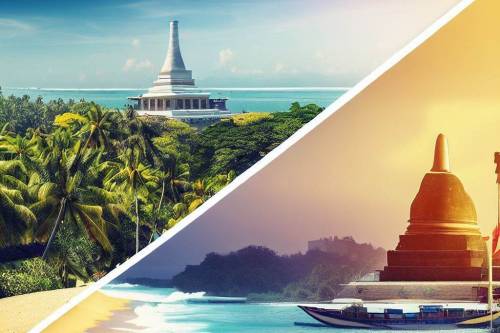
Would you like to spend the summer with as many experiences as possible without spending your entire annual income? Sri Lanka can work, but only if you choose the season, area and real daily-life format instead of relying on a beautiful photograph. From May to September the southwest coast receives more rain, while the east and northeast often offer a better beach season. “Minimum cost” also depends on flights, visa, air conditioning, transport, food, connectivity and an emergency reserve.
This is a practical guide for an independent trip or a temporary move lasting one to three months. It explains which coast to compare in summer, how to build a budget, how to inspect housing, what remote workers should check, which legal status applies and how to fill your free time. A low-cost trip should not become a survival exercise.
What summer means in Sri Lanka
Sri Lanka does not have one summer season across the island. According to the current Sri Lanka Tourism weather guide, May–September is the southwest monsoon: the southwest coast and hills receive more rain, while the dry zone, Trincomalee, Arugam Bay and Jaffna are often more suitable. October–November is transitional, with local showers, storms and rough seas. December–February is usually better for the southwest, although popular accommodation may cost more.
| Period | Areas to compare | Check |
|---|---|---|
| May–September | Trincomalee, Nilaveli, Uppaveli, Arugam Bay, Jaffna | Heat, local showers, seasonal demand and long transfers |
| October–November | Several regions according to the fresh forecast | Transition weather, storms and changing sea conditions |
| December–February | Hikkaduwa, Unawatuna, Galle, Mirissa, Weligama | Higher southwest demand and early booking |
| March–April | South, cultural triangle and hills by route | Heat and afternoon inter-monsoon storms |
Where to go for more experiences
Trincomalee, Nilaveli and Uppaveli are logical choices for a summer beach route. Sri Lanka Tourism describes Trincomalee as an area with a natural harbour, beaches, whale watching, fishing and diving; Nilaveli is presented as a quieter northeast beach. Check roads, boat operators and weather before booking an activity.
Arugam Bay suits surfers and travellers who prefer a compact resort rhythm. Seasonal demand matters, and a pleasant beach atmosphere does not mean every swimming condition is safe. Choose an instructor who assesses waves, currents and the student’s experience.
Jaffna is better for culture, architecture and a different side of the island than for an all-purpose beach holiday. The cultural triangle and central hills add temples, history, tea country and cooler evenings. Hikkaduwa, Unawatuna and the south may be wetter in summer, but a rainy day can become a museum, café, town or travel day. Compare the actual forecast rather than a promise of eternal summer.
Do not fit the entire island into a short stay. Distances are large and travel time depends on roads, stops, transport and weather. Two well-chosen bases usually produce more experiences and fewer costs than changing accommodation every day.
Visa and remote work
Tourist travel uses an ETA. Under the official 2026 information, nationals of 40 countries, including Russia, Belarus, Kazakhstan, India, China, the United Kingdom, the United States and many EU countries, may receive a tourist ETA free of charge for 30 days. Seychelles and Singapore have a free 30-day arrangement, while Maldives citizens receive 90 days; other passports must be checked against the official fee table. Verify your passport’s rule before departure on the official ETA portal.
Enter your passport number, nationality and birth date exactly, use the same document at the border and keep your ETA confirmation. Immigration may request a passport valid for at least six months, a return ticket and sufficient funds. Apply for an extension through the official Immigration service before the current period ends; fees and documents depend on nationality and category.
A tourist ETA does not authorize work in Sri Lanka, including local orders, business or paid and unpaid employment. People serving overseas clients should study the separate Digital Nomad Visa. The official document describes a one-year status, a USD 500 annual fee for the main applicant and a minimum monthly remittance of USD 2,000, plus supporting documents. Confirm that the category and application process are current, and check tax obligations.
How to calculate a minimum budget
Do not use one magic monthly number. Create five envelopes: housing, food, connectivity and electricity, transport and activities, and a reserve. Treat flights separately because the price depends on departure city, dates, connections and baggage. Visa rules also vary by passport.
| Envelope | Lower-cost approach | Where costs rise |
|---|---|---|
| Housing | Room or simple monthly apartment away from the first line | Season, air conditioning, deposit, electricity, cleaning and commission |
| Food | Local cafés, markets and some cooking | European restaurants, delivery, imported food and drinks |
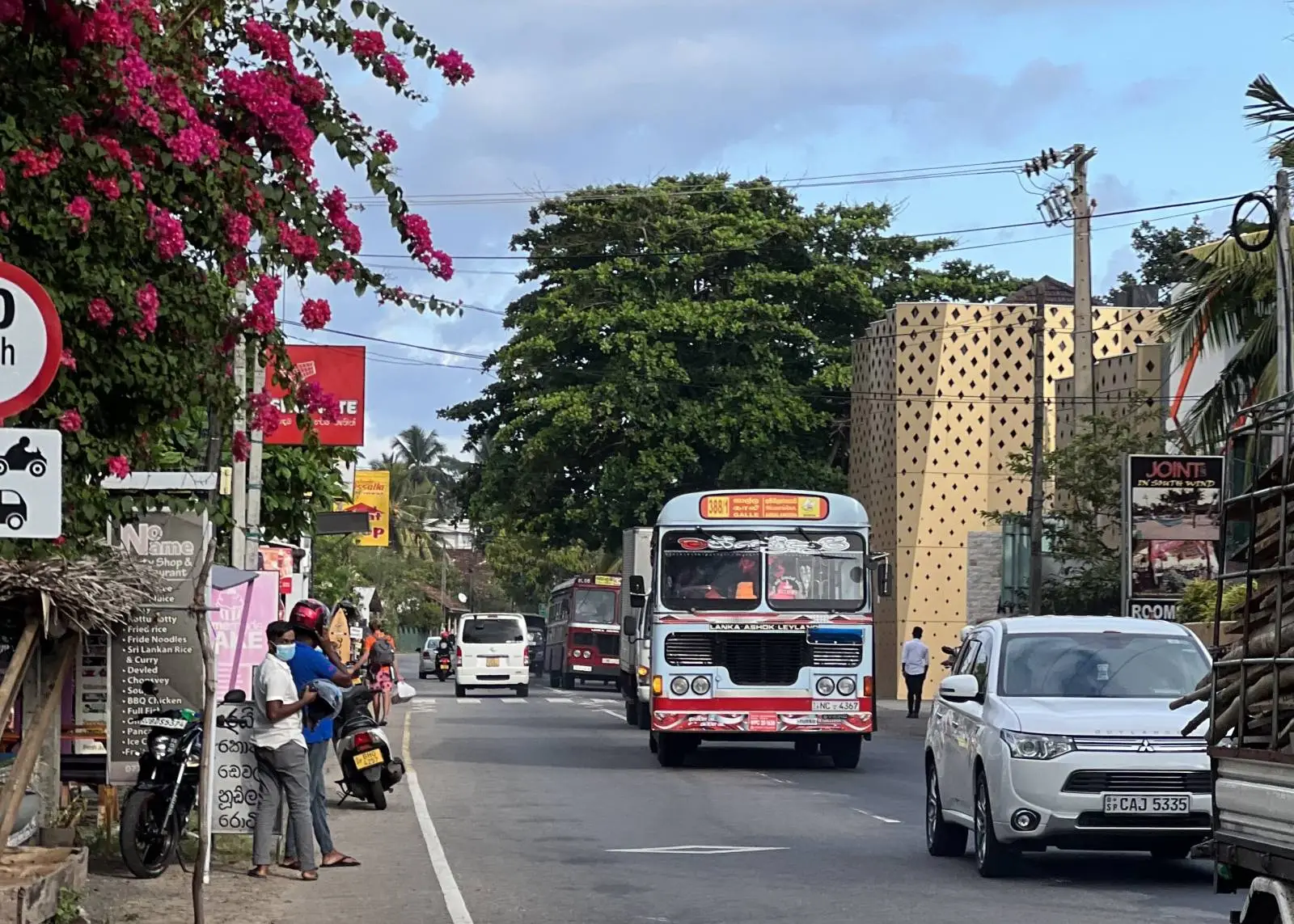
| Transport | Buses/trains and short tuk-tuk rides | Private transfers, spontaneous tours and car hire |
| Connectivity | Local SIM and tested Wi-Fi | Roaming, paid internet and air-conditioning power |
| Reserve | Separate funds for a doctor, new housing or urgent travel | Insurance gaps and planning without a buffer |
For transparency, but not as a Sri Lankan price list: Numbeo’s user sample for Colombo in June 2026 shows about Rs 1,475 for an inexpensive meal, Rs 50 for a local transport ticket, about Rs 6,074 for broadband and about Rs 84,000 for a one-bedroom apartment outside the centre. These are not Hikkaduwa or Trincomalee guarantees. Compare several listings for your dates and ask for the final amount in LKR.
Answer “how much do I need to earn?” as monthly essentials plus flights and documents plus a reserve of at least one additional month. If income is unstable, do not plan a long stay where rent and food consume every available rupee. You can live more cheaply, but having no reserve quickly turns economy into risk.
Housing and a workspace
Book a few nights first and inspect a long rental in person. Check the map location, road and venue noise, mobile coverage, Wi-Fi in the morning and evening, sockets, water, ventilation, mosquito screens, refrigerator, kitchen and washing machine. Confirm whether electricity, internet, cleaning and final charges are included, who handles repairs and how the deposit is returned.
Put the term, amount, currency or LKR equivalent, meter readings, inventory and early departure rules in writing. Do not send a large payment to an unknown intermediary without checking the owner and property. For a guesthouse, homestay or rented apartment, check whether the provider belongs to a category registered by SLTDA.
A remote worker needs more than a pretty terrace. Check quiet hours, a backup SIM, a power bank and a plan for outages. Sri Lanka is UTC+5:30, so calculate call windows for your team. Keep work documents online and offline, and do not accept local orders on a tourist status.
More experiences for less
- Build a route from one beach base and one cultural or nature region instead of five transfers.
- Plan water activities around the fresh forecast; a calm-looking bay is not a safety guarantee.
- Compare local cafés, markets, trains and buses, but confirm fares and travel time first.
- Leave some days without paid excursions: a walk, temple, market, museum, surf lesson or independent route can offer more contact with local life.
- Do not feed or touch wild animals, stand on coral or book operators who promise forced wildlife contact.
Health and safety
CDC lists year-round dengue risk and recommends preventing mosquito bites; hepatitis A vaccination is recommended for unvaccinated travellers. Discuss vaccines and medicines with a doctor, carry prescriptions in original packaging and buy insurance that covers treatment and medical evacuation.
Sri Lanka Tourism advises visitors not to treat tap water as safe to drink. Use sealed bottled water and be cautious with ice. Follow flags and lifeguard advice, avoid going far into rough surf and do not leave documents with valuables unattended. The emergency ambulance number is 1990; contact your insurer promptly after a serious incident.
A 30-day example
- Days 1–3. Adapt, buy a SIM, arrange cash and check housing, water, internet and the nearest clinic.
- Days 4–12. Stay in one main area: beach, local food, market, two quiet days and one weather-dependent activity.
- Days 13–20. Take a cultural or nature route, such as Trincomalee and its surroundings when in season.
- Days 21–27. Return to a work rhythm, review spending and decide whether to extend.
- Days 28–30. Keep a buffer for transport, documents, baggage and flight changes.
Sri Lanka gives maximum experiences for minimum cost not when you find the cheapest listing, but when you choose the right season, reduce unnecessary transfers and keep a reserve. Start with a short trial, calculate in rupees and verify official rules before every long commitment. For daily life and work by the ocean, see Live and work by the ocean.
Sources: Sri Lanka Tourism — Weather; Sri Lanka Tourism — Travel Tips; Sri Lanka Tourism — Trincomalee, Nilaveli and Uppaveli; Sri Lanka ETA — official portal; Department of Immigration — Tourist Visa; Digital Nomad Visa Category; CDC — Sri Lanka Traveler View; SLTDA — registered tourism services; Numbeo — Cost of Living in Colombo, June 2026.