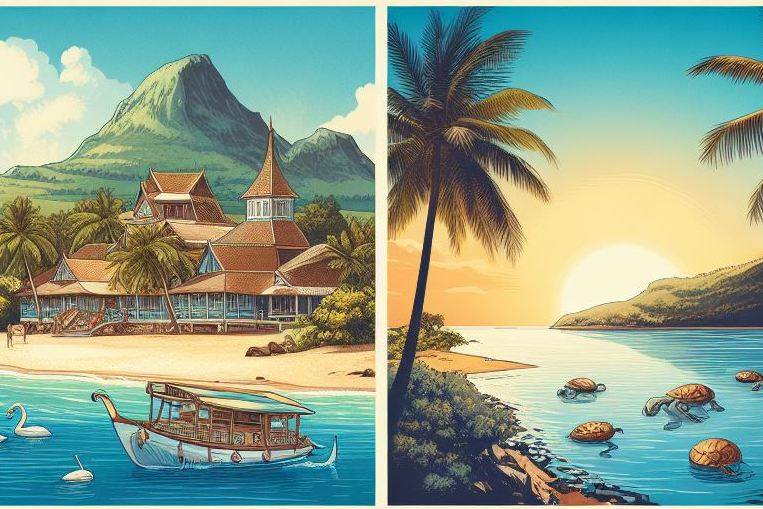
Sri Lanka and Mauritius are often mentioned together as two tropical island destinations in the Indian Ocean: warm water, palm trees, exotic nature, beaches, and the chance to escape winter. But the style of travel they offer is very different.
Sri Lanka is a large and diverse country where the beach can easily become just one part of a broader itinerary. In a single trip, you can see ancient cities, tea plantations, mountains, national parks, elephants, leopards, and several completely different coastlines.
Mauritius is much more compact. Its main advantage is not the number of contrasting regions, but the combination of beautiful lagoons, good beaches, convenient infrastructure, short distances, and comfortable everyday life in one chosen part of the island.
If the difference had to be reduced to one sentence, Sri Lanka is stronger as an eventful journey through a country, while Mauritius is better for a comfortable island holiday by the sea with short trips around the area.
What matters mostSri LankaMauritius10–14 day tripExcellent for a larger multi-stop itineraryEasier to choose one base and explore the island on day tripsClassic beach holidayVery good, but sea conditions and season depend heavily on the coastOne of its biggest strengths: lagoons, calm water, and white sandNature and wildlifeSafaris, elephants, leopards, mountains, forests, tea countryMountains, waterfalls, lagoons, volcanic landscapes, endemic speciesHistory and cultureClear advantage: ancient capitals, temples, fortsFewer monumental sights, but a fascinating mixed cultureSurfingStrong destinationSurfing and especially kitesurfing are available, but are not the island’s main focusSnorkeling and calm seaDepends on the location and seasonStrong advantage thanks to coral lagoonsHotels and resortsHuge range from guesthouses to luxuryParticularly strong in high-quality beach resorts and villasEveryday expensesLower on averageUsually higher, especially accommodation, imported goods, and tourist servicesTransportTrains, buses, tuk-tuks, but longer distances and slow journeysCompact island, easiest with a car; buses and Metro Express are also availableRemote workPossible, but infrastructure is unevenBetter for a stable lifestyle, and the Premium Visa is much more attractive than Sri Lanka’s DNVTourist densityVisitors are spread across a large countryResort areas are more compact, but the island overall is much calmer than BaliLong staysDigital Nomad Visa exists, but with fairly strict conditionsOne-year Premium Visa, free of charge and with a lower financial thresholdThe Main Difference: Traveling Through a Country or Having a Comfortable Island Base
In Sri Lanka, the journey itself is part of the experience. A typical itinerary can include Sigiriya or Polonnaruwa, Kandy, the highlands around Ella and Nuwara Eliya, a safari in one of the national parks, and several days on the coast. Even the climate changes noticeably within the country: the hot coast can quickly give way to cool, misty highlands.
Mauritius works differently. Its area is about 2,030 km², and distances across the main island are measured in tens of kilometers. The official tourism portal gives a rough figure of around 45 km from east to west and about 61 km from north to south. That does not mean every drive takes an hour: traffic around Port Louis and during rush hour can slow things down considerably. But in general, there is no need to keep changing hotels in order to see different parts of the island.
In Mauritius, you can base yourself in places such as Flic en Flac, Tamarin, Grand Baie, the east coast, or near Le Morne and take a different day trip almost every day while returning to the same apartment or hotel in the evening.
So Sri Lanka is better for people who enjoy the process of a larger journey, while Mauritius suits those who want less logistics and more predictable relaxation.
Beaches: Mauritius Has the Advantage if Swimming Is the Priority
Both islands have excellent coastlines, but the sea feels very different.
Sri Lanka has around 1,600 km of coastline and an enormous variety of beaches. Mirissa, Unawatuna, Hikkaduwa, Weligama, Tangalle, Bentota, Trincomalee, Nilaveli, Pasikuda, and Arugam Bay all offer very different experiences — from surfing to calm swimming.
The main complication is seasonality and sea conditions. The south and southwest coasts are generally most reliable from around November to March, while from May to September the better conditions tend to shift east. Open stretches of coast can have strong waves and rip currents, so a beautiful beach does not always mean comfortable swimming.
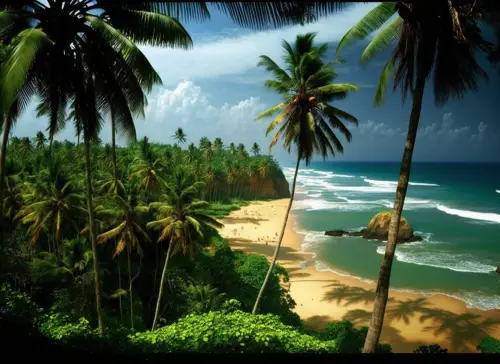
Mauritius is simpler in this respect. A large part of the island is surrounded by coral reefs, creating lagoons with calmer water behind them. This is what produces the classic Mauritius beach experience: pale sand, turquoise water, snorkeling, paddleboarding, and the ability to swim for long periods without constantly fighting ocean swell.
Flic en Flac stretches for around eight kilometers and combines beach, lagoon, and reef. Belle Mare is known for its long, pale beach on the east coast. Le Morne combines a beautiful lagoon with one of the island’s most recognizable mountain landscapes. In the north, Mont Choisy and Trou aux Biches are popular choices.
That said, Mauritius is not one giant calm lagoon. Parts of the southern coast are much wilder, with stronger currents, cliffs, and open ocean. The Le Morne area is also especially popular with kitesurfers because of its winds.
If you want a more varied coastline, long journeys along the ocean, surfing, and the ability to switch beach regions with the season, I would give Mauritius the advantage. If you value a more varied coastline, long journeys along the ocean, surfing, and the ability to switch beach regions with the season, Sri Lanka is more interesting.
When to Go: The Two Islands Have Very Different Seasonal Patterns
Sri Lanka does not have one single best season for the entire island. Its two monsoon systems effectively let travelers “switch” between coasts.
From December to February, the south and southwest usually offer calmer seas and sunnier weather. March and April are hotter, but many routes still work well. From May to September, the southwest gets more rain, while the east — including Trincomalee, Nilaveli, Pasikuda, and Arugam Bay — is often in a better season. October and November are more unpredictable across the country.
Mauritius is simpler: summer runs roughly from November to April, while the cooler, drier winter is from May to October.
During summer, the coast is generally hotter and the water warmer, but rainfall becomes more likely from January to March. The official tourism service gives a rough summer coastal temperature of around 28–33°C during the day, with sea temperatures around 26–30°C.
From May to October, conditions become cooler and windier: coastal daytime temperatures are usually around 22–28°C, while the sea is roughly 22–25°C. For some travelers, this is perfect weather for active holidays; for others, the water may no longer feel as warm.
There is another factor: tropical cyclones. Mauritius Meteorological Services considers November 1 to May 15 the official cyclone season. That does not mean a holiday during these months will necessarily be affected, but the risk is worth keeping in mind when traveling during the height of the local summer.
If you want comfortable temperatures, hiking, and less rain, late local spring and summer are especially attractive, although January to March are wetter. If you prefer comfortable temperatures, hiking, and less rain, roughly May to October is an excellent period.
Nature: Sri Lanka Wins on Diversity and Wildlife
If the main purpose of the trip is nature and wildlife, Sri Lanka has a fairly clear advantage.
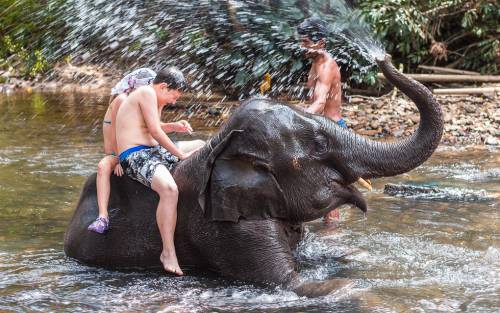
National parks are a major part of the travel experience. Udawalawe is known for elephants, Yala for wildlife including leopards, and Minneriya for seasonal elephant gatherings. Different regions are home to crocodiles, buffalo, monkeys, and a wide variety of birds. Add tropical forests, the Central Highlands, tea plantations, waterfalls, and very different climate zones, and the overall variety is considerable.
Mauritius has no large land animals or safari experience of this kind. Its natural value is different: endemic plants and birds, volcanic mountains, forests, gorges, lagoons, and coral ecosystems.
Black River Gorges is the country’s largest national park. It has more than 50 km of trails, forests, waterfalls, mountain views, and rare endemic species. Le Morne Brabant is both one of the island’s most beautiful mountains and a UNESCO World Heritage Site. Chamarel, waterfalls, and smaller nature reserves are also popular inland destinations.
So Mauritius is excellent for a compact combination of mountains, lagoons, waterfalls, hiking, and sea without long transfers. Mauritius is excellent for a compact combination of mountains, lagoons, waterfalls, hiking, and sea without long transfers.
Culture and History: Sri Lanka Is Deeper, Mauritius More Mixed
History is one of Sri Lanka’s clearest advantages.
Anuradhapura and Polonnaruwa were major ancient capitals. Sigiriya, the cave temples of Dambulla, the Temple of the Tooth in Kandy, and the colonial fort in Galle make it possible to build entire routes around history and religion. These are not just isolated sights near a beach — they are standalone reasons to visit the country.
Mauritius does not have a comparable number of ancient monumental sites. Its history is expressed more through the mixing of peoples, religions, and cultures: African and Creole heritage, Indian traditions, French and British colonial influence, and a Chinese community.
Le Morne Brabant is connected with the history of slavery and resistance. In Port Louis, the market, urban environment, and cultural mix are particularly interesting. Hindu temples, mosques, churches, and Chinese shrines coexist across the island, and festivals from different communities are a normal part of the calendar.
If you want a multicultural island society where Indian, African, European, and Chinese influences have mixed within a small area, Sri Lanka is the clear choice. If you are more interested in a multicultural island society where Indian, African, European, and Chinese influences have mixed within a small area, Mauritius is fascinating.
Food: Two Strong Cuisines, but Very Different in Character
Sri Lankan cuisine is bold, spicy, and easy to recognize: rice and curry, hoppers, string hoppers, kottu, dhal, sambol, roti, fish, and seafood. Simple local food often remains very affordable, especially if you do not eat exclusively in tourist restaurants.
Mauritius is interesting precisely because of its cultural mix. Creole, Indian, Chinese, and French traditions do not exist separately — they constantly overlap. Popular foods include dholl puri, farata, curry, fried noodles, boulettes, rougaille, seafood, and many forms of street food.
In terms of the diversity of cultural influences, Mauritian cuisine may even be more varied. But everyday food costs are usually higher: many products are imported, and the tourist restaurant market generally targets a higher average budget.
If the culinary blend of India, Africa, China, France, and island Creole culture matter most, Sri Lanka usually has the advantage. If you are interested in the culinary blend of India, Africa, China, France, and island Creole culture, Mauritius offers a completely different experience.
Resorts and Tourism Infrastructure: Mauritius Is More Comfortable, Sri Lanka More Diverse
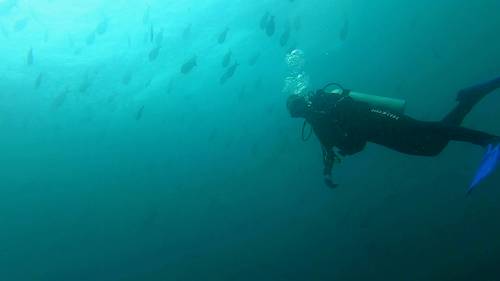
Mauritius has long specialized in high-quality beach holidays. The island has many good resorts, villas, golf courses, spas, dive centers, catamaran trips, and organized marine excursions.
At the same time, Mauritius is not limited to expensive five-star hotels. There are apartments, guesthouses, and normal long-term rentals, especially around Flic en Flac, Tamarin, Black River, and the north of the island. However, the overall price level is still usually higher than in Sri Lanka.
Sri Lanka offers a much wider range of travel styles. You can travel almost backpacker-style, stay in family-run guesthouses, book small hotels, or choose expensive boutique properties and beach resorts.
So Mauritius usually wins on range of travel styles and the ability to build a trip around very different budgets, while Sri Lanka wins on range of travel styles and the ability to build a trip around very different budgets.
Everyday Life and Remote Work: Mauritius Has a Serious Advantage
For someone who wants to spend several months on an island rather than travel for two weeks, the comparison changes.
In Sri Lanka, it is possible to work comfortably from Colombo, the south coast, and some tourist centers. But fixed internet quality and power reliability should be checked for the specific property. A small beautiful house by the ocean can sometimes have worse connectivity than expected.
Life in Mauritius is more compact and organized. The north, west, and southwest are especially popular for longer stays. A car makes it easy to connect the beach, supermarkets, sports, cafés, and a working routine. The budget, especially for accommodation and a car, will be higher.
The biggest difference is the legal status for remote work.
Mauritius Premium Visa
Mauritius offers a Premium Visa valid for one year and renewable. It is officially intended, among others, for professionals who want to live on the island and work remotely for overseas businesses or clients.
The Premium Visa itself is free of charge.
In the published Economic Development Board requirements, the minimum income threshold is:
- USD 1,500 per month for each adult applicant;
- USD 500 per month for each dependent child.
Applicants also need to provide evidence of a long-stay plan, medical and travel insurance, bank statements, and proof of income.
This is noticeably easier than Sri Lanka’s Digital Nomad Visa, which requires not just income but at least USD 2,000 in monthly remittances, plus a separate visa fee.
Taxes Under the Premium Visa
The Premium Visa does not automatically mean exemption from tax.
Mauritius has a special regime for Premium Visa holders. The Mauritius Revenue Authority states that income from remote work is taxable in Mauritius to the extent that it is remitted to Mauritius. Spending money in Mauritius using a foreign credit or debit card is not treated as such a remittance.
If money is transferred into a Mauritian bank account, it may become taxable unless the holder declares that the relevant tax has already been paid in the country of origin or tax residence.
So the Premium Visa should not be described as “a year with no tax questions.” But structurally, it is much more convenient for many remote workers than Sri Lanka’s requirement to regularly remit at least USD 2,000 into the country.
If you need an official status specifically for living and working remotely for a year, Mauritius currently looks like the more convenient option of the two.
Visas in 2026: Both Countries Are Fairly Easy for Russians
For Russian passport holders, Sri Lanka has provided a free 30-day tourist ETA since May 25, 2026. The ETA still has to be obtained in advance. Tourist stays can be extended if necessary.
In Mauritius’ official visa requirements list, the Russian Federation is marked as No visa required. The final permitted length of stay is decided by the immigration officer on arrival. In its tourist visa rules, the Passport and Immigration Office states that a tourist may be allowed to stay in the country for up to six months in total during a calendar year, subject to individual approval and compliance with immigration requirements.
At entry, travelers may be asked to show a return ticket, proof of accommodation, and sufficient funds for the trip.
So both destinations are fairly convenient for a short holiday. For long-term living, Mauritius is clearly stronger thanks to the free Premium Visa, provided the applicant meets the requirements.
Transport: Shorter Distances in Mauritius, More Options in Sri Lanka
Sri Lanka is much larger. It has a cheap and extensive bus network, railways, tuk-tuks, taxis, and cars with drivers. But transfers often take a long time.
In Mauritius, distances are much shorter. Buses cover the island, and Metro Express connects Port Louis with the central part of the island and Curepipe. For tourists or expats, however, a car is usually the most convenient way to explore the whole island.
A car is especially useful if you are not living in the center of a major resort area: beaches, supermarkets, hiking trails, and other parts of the island become much easier to reach.
Both countries drive on the left.
If you want to travel without renting a car, Mauritius is easier. If you are comfortable driving yourself and returning to the same accommodation every evening, Mauritius is easier.
Which Is Cheaper?
If budget matters, Sri Lanka wins on average.
It is easier to find inexpensive guesthouses, local restaurants, cheap transport, and accommodation outside premium areas. An active trip can still become expensive because of safaris, entrance fees, drivers, and frequent transfers, but basic daily costs remain comparatively low.
Mauritius can also be done without a luxury budget: you can rent an apartment, cook at home, buy food at markets, and eat in local establishments. But seaside accommodation, car rental, imported goods, restaurants, and marine activities raise the budget noticeably.
It is especially unhelpful to compare the countries using a single average restaurant bill or apartment price. Living in Grand Baie and renting a simple property in a less touristy part of Mauritius are completely different budgets. The same applies in Sri Lanka: a beach villa in Ahangama and an apartment in an ordinary town are not comparable.
If the priority is compactness, lagoons, good service, and not having to keep changing accommodation, Sri Lanka is usually better value. If your budget allows you to pay more for compactness, lagoons, good service, and not having to keep changing accommodation, Mauritius can justify its higher cost.
Safety: Both Islands Are Generally Calm, but the Risks Are Different
Both destinations are generally suitable for independent travel, and the main risks are much more ordinary than exotic animals.
In Sri Lanka, road traffic and sea conditions deserve particular attention. Some open beaches have strong waves and rip currents. In areas with wild elephants, it is important to keep your distance and not approach animals for photographs.
Mauritius has no large dangerous land predators. The main natural risks are connected with the sea, reefs, strong currents in some areas, and weather during tropical cyclone season.
When snorkeling or walking in shallow water, avoid stepping on coral or marine animals. On the southern coast, the open ocean can be much rougher than the calm lagoons of the north and west.
In both countries, good travel insurance makes sense, and beautiful tropical water should never automatically be assumed to be safe.
Which Is Better for a First Trip?
If you have 10–14 days and want to see as many completely different things as possible, I would usually choose Sri Lanka. Ancient cities, a train through tea-covered mountains, safaris, temples, and the ocean combine into a very eventful trip.
If you want beautiful water, a good hotel or villa, calm swimming, snorkeling, and island trips without constantly repacking your bags, Mauritius is stronger.
For a honeymoon, a relaxed beach holiday, or a family trip, Mauritius will often be easier. For independent travel where adventure, history, wildlife, and constant changes of scenery matter, Sri Lanka is more interesting.
If the beach itself is the main criterion, the choice also depends on your preferences:
- Mauritius — calm lagoons, clear water, snorkeling, white sand, and resort comfort.
- Sri Lanka — a longer and more varied coastline, surfing, different beach towns, and the ability to switch coasts with the season.
Where Is Better for Several Months?
For long-term living, the answer is less obvious.
Sri Lanka is cheaper and more interesting if you want to keep moving, live in different regions, travel extensively, and avoid tying yourself to one resort area.
Mauritius is more convenient if you want to choose one base, rent a home and a car, and build a stable routine around work, the sea, sports, and short trips. The island is more compact, infrastructure is more predictable, and the Premium Visa is a major advantage for remote workers.
Mauritius does, however, require a higher budget. The fact that the visa is free does not mean that life on the island is cheap.
For someone with foreign income from USD 1,500 per month who needs an official one-year status and can afford a higher island budget, Mauritius looks more practical than Sri Lanka for long-term remote living.
For someone who values lower costs, travel, and the diversity of the country more, Sri Lanka remains more interesting.
So, Sri Lanka or Mauritius?
The two islands have very different strengths.
Sri Lanka is a bigger journey. It offers more history, wildlife, climate zones, national parks, cities, and opportunities to keep changing your route. It is usually cheaper and gives you far more options for independent travel.
Mauritius is a comfortable island base. Its biggest strengths are lagoons, calm seas, beautiful beaches, compact size, resort infrastructure, water activities, and relatively convenient conditions for longer stays.
For a first, eventful two-week trip, I would more often choose Sri Lanka.
For a relaxed beach holiday, honeymoon, or family trip, I would more often choose Mauritius.
For several months of remote work with a sufficient budget, Mauritius becomes especially interesting because of the Premium Visa.
And if you have the opportunity to visit both, they are different enough that they do not feel like interchangeable “tropical islands.”
Information on visas, Premium Visa tax rules, and seasonality was checked in September 2026. Immigration and tax rules can change, so they should be verified again on official websites before traveling or planning a long-term move.
Sources: Sri Lanka Tourism — weather and seasons; Sri Lanka Tourism — beaches; Sri Lanka ETA — official portal; Sri Lanka Department of Immigration and Emigration; Sri Lanka Digital Nomad Visa — official requirements; Mauritius Now — weather; Mauritius Now — beaches; Mauritius Now — transport; Mauritius Now — Black River Gorges National Park; Mauritius Passport and Immigration Office — Visa Requirements; Mauritius Passport and Immigration Office — Premium Visa; Economic Development Board Mauritius — Premium Visa FAQ; Mauritius Revenue Authority — Premium Visa tax FAQ; Mauritius Meteorological Services — Climate of Mauritius