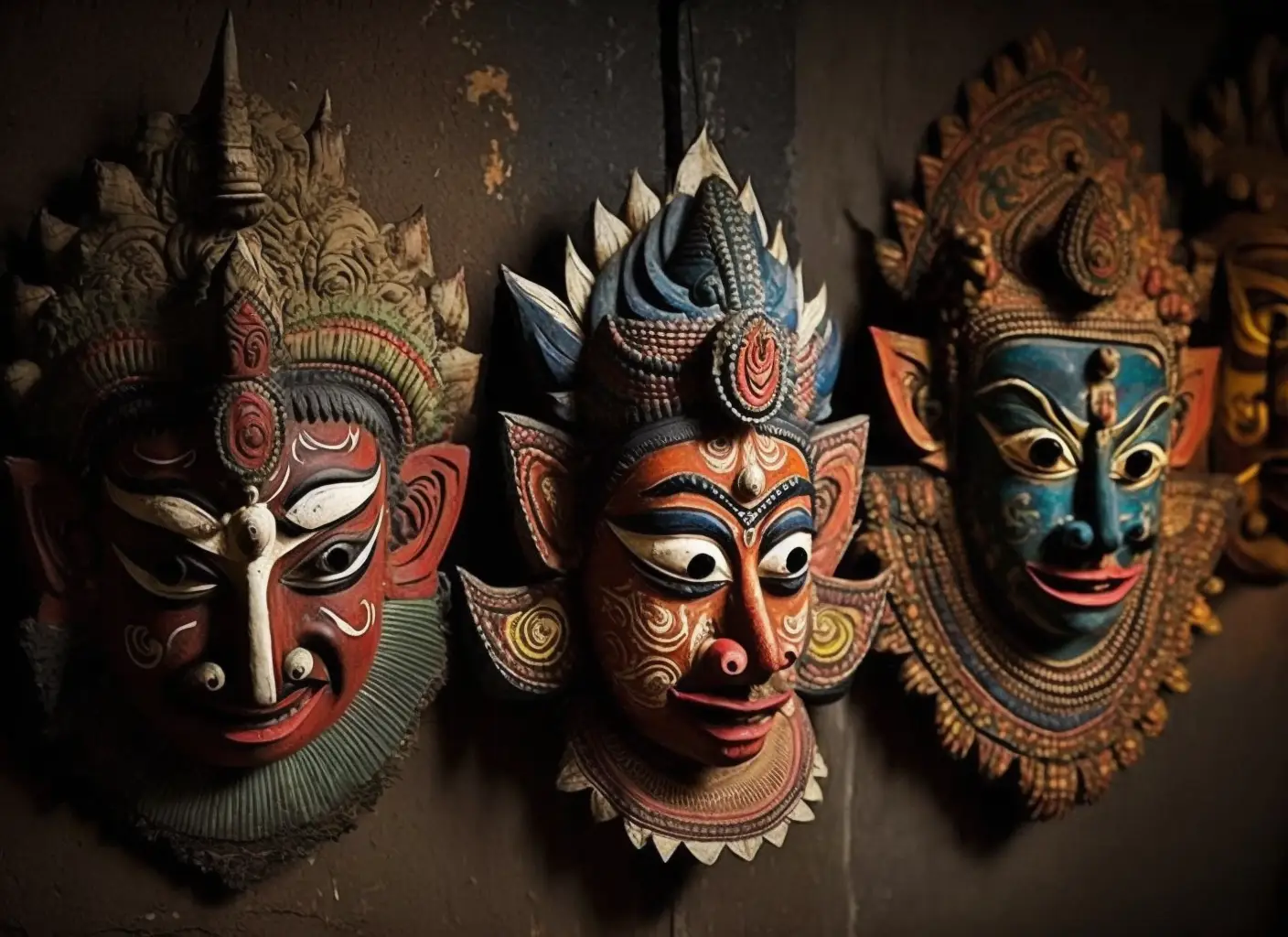
Ambalangoda (Mask Museum)
When travelling around Sri Lanka, make time for Ambalangoda, a lively town known for its traditional mask museum, Buddhist temples, colourful markets and small shops.
The Ariyapala Traditional Masks Museum in Ambalangoda displays masks representing demons, gods, heroes and villains who appear in traditional performances. It is a chance to look beyond a striking souvenir and understand how Sri Lankan masks connect with legend, ritual, theatre and ideas about healing.
Traditional masks are carved from light kaduru wood. This is not balsa, but a local timber valued for its low weight and workable texture. The blank is shaped by hand, dried and finished so that a dancer can wear it without carrying unnecessary weight. Paint and ornament complete the character: colours, eyes, teeth, tongue, crown and additional faces help the audience recognise the role.
Masks in Sri Lanka were made for particular dance and ritual traditions that have been passed down for generations. Kolam is a theatrical and satirical tradition whose masks reflect the humour of social performances. Sanni is an older ritual tradition associated with ideas about illness and the expulsion of demons. In the historical ritual, healing was understood through ceremony, music, dance and offerings; it is not a substitute for modern medical care. Raksha masks, sometimes described as devil masks, are used in festivals and processions.
Why Ambalangoda is associated with masks
Ambalangoda lies on Sri Lanka’s south-western coast in Galle District. It became one of the island’s main places where wood-carving traditions remain visible beyond a museum display: carvers, family workshops and shops continue to work with the form. The town therefore suits both visitors who want to see a finished collection and those who want to understand how a decorative object relates to dance, theatre and ritual.
Ariyapala Traditional Masks is a cultural centre combining a museum, workshop and craft retail area. The centre’s official website describes a multi-generational Wijesooriya family tradition and presents masks alongside other traditional handicrafts. That context matters: the visit is not only a walk past bright faces, but an introduction to a particular southern Sri Lankan craft tradition.
What kinds of masks can you see?
Kolam: theatre and satire
Kolam combines music, dance, mime and dialogue. Its characters include comic figures, officials, ordinary people and mythological beings. A mask enlarges the expression and makes the role readable from a distance. Behind the grotesque appearance is social observation: the tradition plays with human weaknesses and social roles, so the collection is more than a wall of colourful faces.
Look at Kolam masks together with the description of each character rather than reducing every face to a generic demon. Human and comic figures are part of the tradition, and their meaning becomes clearer in the context of a performance.
Sanni: ritual, illness and character
Sanni Yakuma is associated with a traditional ritual in which different demonic figures represent illnesses or suffering. The Ariyapala collection’s official description refers to 18 Sanni masks, each corresponding to a particular ailment. Their deliberately exaggerated faces can be unsettling, but the museum presents the cultural history of a belief system and performance ritual, not a medical treatment.
Take time with these masks and notice the colours, teeth, eyes, tongue and headdress. These details are not a modern diagnostic system; they show how carvers turned an abstract fear into a memorable character.
Raksha: festive and processional figures
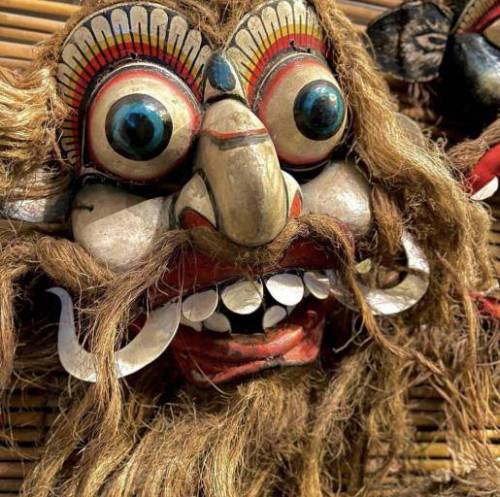
Raksha are colourful demonic characters associated with festivals and processions. Bulging eyes, protruding tongues, crowns and snake or bird motifs are typical features. The museum’s official collection separately mentions Naga Raksha, Gurulu Raksha, Mayura Raksha and other figures. They do not all mean the same thing: alongside frightening features there may be symbols of protection, strength, peace or prosperity.
How a traditional mask is made
The visit becomes easier to understand when you imagine the maker’s sequence of work. A suitable blank of light kaduru wood is selected and the overall volume is marked out. The carver removes material gradually with chisels, shaping the face, relief, teeth, eyelids and decorative elements. The blank is then dried; Sri Lanka Tourism describes a traditional process of keeping the wood over a fire for about a week so it becomes more resistant to insects. Techniques can differ between workshops, so one method should not be presented as an absolute rule.
After carving, the surface is prepared and painted. Patterns are applied by hand, and colour and detail help distinguish each character. Ask the maker which part was made in the workshop, how long the work takes, whether the mask is intended for dance, theatre, ceremony or modern interiors, and how it should be cared for. That conversation is more useful than choosing only by size and brightness.
What a visit includes
At Ariyapala Mask Museum you can see an exhibition of traditional masks, material about the tradition, a workshop and craft products. The museum’s own description also mentions puppet displays and the research value of the collection. Do not rush only to the most dramatic mask: read the explanations, compare the three groups and notice how an exhibition differs from a shop window.
Live dance shows should not be treated as guaranteed at every visit. The old version of this article mentioned performances approximately once a week, but a current reliable public schedule has not been confirmed. If a show is the main reason for your trip, contact the museum in advance and confirm the date, time, duration, price and whether booking is required. Even without a performance, the collection and workshop remain a separate experience.
Practical information
The museum is at No. 432, Galle Road, Ambalangoda, in Galle District. The museum’s current contact page lists opening hours from Monday to Saturday, 08:00–18:00. This is the centre’s published information, not a guarantee for every future date: public holidays, private events and schedule changes can affect access. Check the contact page before travelling and write or call, especially if you plan to visit on Sunday, arrive with a group or want a workshop demonstration.
Ambalangoda fits naturally into a south-west coast itinerary, for example as a stop between Hikkaduwa, Bentota and Galle. Travel time depends on your starting point, traffic and transport, so avoid planning a connection down to the minute. If you are travelling independently, save the museum’s name and address in advance: the main road has several mask shops, and the name on your map should match the official website.
Allow about an hour for a calm look around the exhibition and workshop, and longer if you plan to buy something or speak with a carver. This is a planning estimate, not an official tour duration. Ask whether photography is permitted in each room, do not touch exhibits without permission, and ask about the origin and intended use of a mask before buying it.
How to choose a souvenir
First decide what you are buying. A decorative mask for a home does not need to meet every requirement of stage equipment, while an item described as antique or ritual deserves particular care when checking its provenance. Ask who carved it, what wood was used, whether it was painted by hand, whether it is a contemporary reproduction and how it should be transported.
Do not call an inexpensive factory copy a fake solely because of its price, and do not treat every colourful object as a museum artefact. An honest description is the best guide: a modern decorative mask can be a good souvenir if it is not sold as an ancient object. Protect protruding details from impacts, do not leave the wood for a long time in a damp vehicle, and check airline rules for large hand luggage.
A simple visit plan
- Before leaving, open the museum’s official website, check the contact details and confirm the opening hours.
- In the exhibition, first learn the difference between Kolam, Sanni and Raksha, then look at individual characters.
- In the workshop, ask about the wood, carving stages, painting and the product’s modern purpose.
- If you want a dance performance, obtain separate confirmation; an old schedule does not guarantee a current show.
- When buying a mask, keep its description and pack it so the relief and paint cannot be damaged.
Ambalangoda is worth adding to a Sri Lankan route not as just another museum stop, but as an encounter with a living connection between craft, theatre and local mythology. Even a short visit becomes richer when masks are viewed not only as colourful faces, but as carriers of roles, stories and performance practices. Check the visit conditions in advance and respect the difference between a museum reconstruction, a contemporary artisan’s work and an object once used in a ritual.
Sources: official Ariyapala Mask Museum description; official description of mask types; museum contacts and opening hours; Sri Lanka Tourism: The masks of Ambalangoda; Sri Lanka Tourism: registered craft shops.



Comments
Share your thoughts or ask a question about this article.