
Sri Lanka or Vietnam: Which Is Better for a Holiday, Long Stay, or Remote Work?
An updated comparison of Sri Lanka and Vietnam: nature, beaches, climate, daily life, transport, visas, remote work and budget.
Polonnaruwa is a present-day town in Sri Lanka’s North Central Province, beside the broad archaeological landscape of the island’s medieval capital.
An updated comparison of Sri Lanka and Vietnam: nature, beaches, climate, daily life, transport, visas, remote work and budget.

A practical comparison of Sri Lanka and Bali covering beaches, seasons, wildlife, culture, costs, transport, visas, remote work and the travel style each island suits.

A practical Sri Lanka and Mauritius comparison covering beaches, seasons, wildlife, transport, visas, remote work, costs and the travel style each island suits.
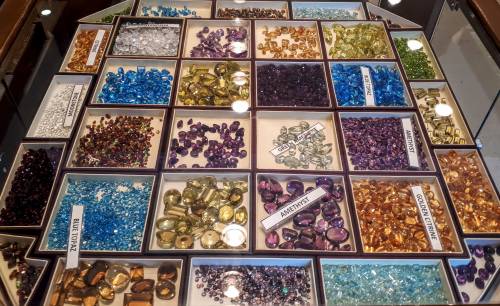
After holidays in such a wonderful country like Sri Lanka, I'm sure that everyone wants to bring a piece of it to home. That kind…
Polonnaruwa is a present-day town in Sri Lanka’s North Central Province, beside the broad archaeological landscape of the island’s medieval capital. This page is about the town of Polonnaruwa, not the whole district: it helps visitors choose a base, understand how the modern centre relates to the Ancient City, and find practical local information for a stay in the area.
The name can refer to more than one part of the local landscape. Kaduruwela is known as Polonnaruwa New Town, while the old royal city and its monuments lie in a separate protected archaeological area north of the modern town. Those are different settings, even when a hotel or transport offer uses the same city name. Before booking, check the exact address against your plan: a place suited to shops, meals and everyday errands may not be next to the ruins, and a stay beside the heritage site may be less convenient for other town services. If you are travelling onward, clarify where a pickup or drop-off will take place rather than assuming “Polonnaruwa” identifies one small centre.
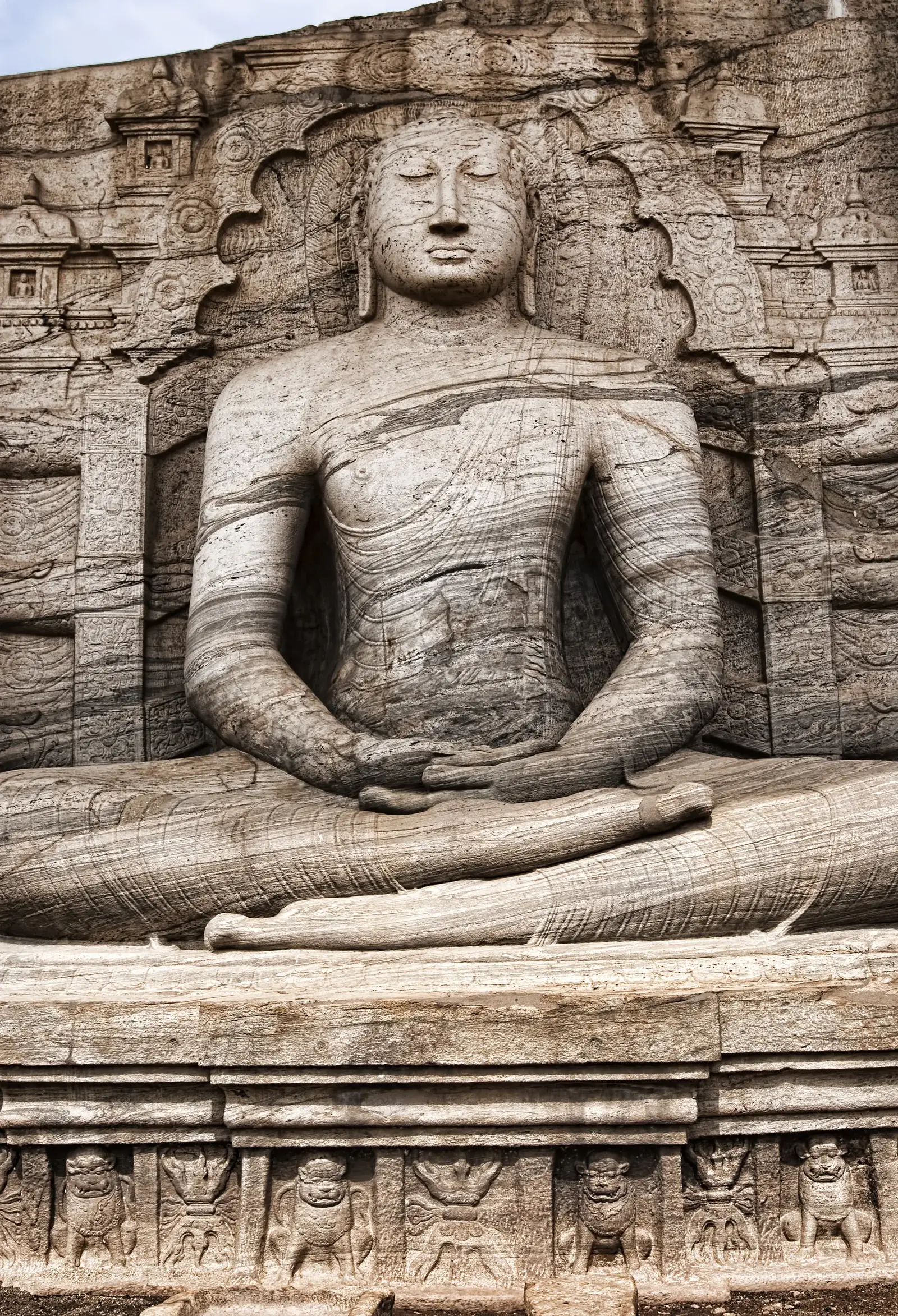
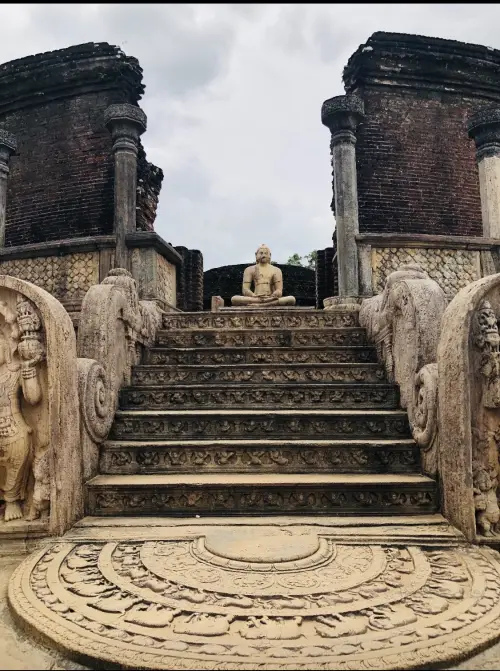
The Ancient City became Sri Lanka’s second capital after Anuradhapura and is especially associated with the medieval period. UNESCO describes the monumental remains of a garden city developed under Parakramabahu I in the 12th century, alongside monuments from earlier and different religious traditions. Within the archaeological area, the Royal Palace, the Sacred Quadrangle and its Vatadage, Gal Vihara’s rock-cut Buddha images, and brick image houses show how varied the city’s religious and civic architecture is. The great reservoir Parakrama Samudra also connects the story of the old capital to the irrigation landscape that still shapes the region. The UNESCO description and the Central Cultural Fund’s site guide offer useful context before you choose which places to see.
The monuments are spread across a large area, so the visit is not simply a short walk between adjacent buildings. The town development plan describes exploring the historic landscape by bicycle, on foot or by tuk-tuk; which option works best depends on distance, weather, mobility and how long you want to spend at each stop. Check the route from your accommodation, allow time for the museum or breaks if they matter to your day, and confirm current access, ticket and visitor information with the Central Cultural Fund. The ruins include sacred shrines as well as archaeological remains, so follow signs and staff guidance, and respect the rules at each site. A considered route through a few locations is often more useful than trying to cover the whole complex in a hurry.
Minneriya and Kaudulla are separate national-park excursions, not extensions of the Polonnaruwa archaeological site; transport, entry arrangements and wildlife guidance need to be checked independently. Anuradhapura is another distinct ancient capital and heritage area, not a neighbourhood of Polonnaruwa. This Polonnaruwa page is also a directory of private and local listings: you can publish information or an offer for the town, or search for accommodation, transport, local services, goods and other help. Location and category filters can make that search more specific, but confirm availability and terms directly with the person who posted an offer.
Cover image: Gal Vihara in Polonnaruwa, photographed by Philip Nalangan on 26 December 2011. The image was resized and converted to WebP for this page. Used under the Creative Commons Attribution 4.0 International licence. Source: Wikimedia Commons.