Wintering in Sri Lanka can mean several different things: three months beside the ocean, a one-month trial in a new country, or a warm holiday with enough internet for remote work. The island can combine beaches, local transport, tropical weather and a lively daily life. But the formula “it is +30 all year, the ocean is calm everywhere and everything is safe” is too simple for real planning.
This practical guide is for people planning part of the winter or several months in Sri Lanka. It covers legal status, the choice of coast, monthly housing, costs, internet, health insurance and safety checks before paying for flights or a long rental.
Decide the length and legal status first
Short tourist visits use an Electronic Travel Authorization (ETA). According to the official ETA portal, from 25 May 2026 nationals of 40 countries, including Russia, Belarus, Kazakhstan, India, China, the United Kingdom, the United States and many EU countries, can receive a tourist ETA free of charge for 30 days. Citizens of Seychelles and Singapore have a free 30-day arrangement, while Maldivian citizens receive 90 days. Other passports are subject to the official fee table.
Even with a free regime, check the current rule for your passport on the official ETA portal. Enter your passport number, nationality and date of birth exactly, and travel with the same document used in the application. At the border you may need a passport valid for at least six months, a return ticket and proof of sufficient funds. Do not rely on old visa prices from blogs.
If you want to stay beyond 30 days, use the official Department of Immigration and Emigration extension service or its current published procedure. Apply before the current period ends; submitting an application does not automatically remove an overstay penalty. The extension period, documents and fee depend on the category and nationality.
A tourist visa does not authorize employment, local business or paid or unpaid work in Sri Lanka. This matters for freelancers and remote employees. The official Digital Nomad Visa describes a separate one-year status for work serving foreign clients, with a USD 500 annual fee for the main applicant and a minimum monthly remittance of USD 2,000. It also lists health insurance, police clearance, a medical report and other documents. Check whether applications are currently accepted and which documents are required before relying on this route.
Choose the coast for the actual winter season
Sri Lanka does not have one season for the whole island. Sri Lanka Tourism describes December to February as peak season on the southwest coast, with more suitable conditions for beaches and water activities. From May to September, the southwest receives more rain and the east and northeast are often considered as alternatives. October–November and March–April are transition periods with local showers and storms.
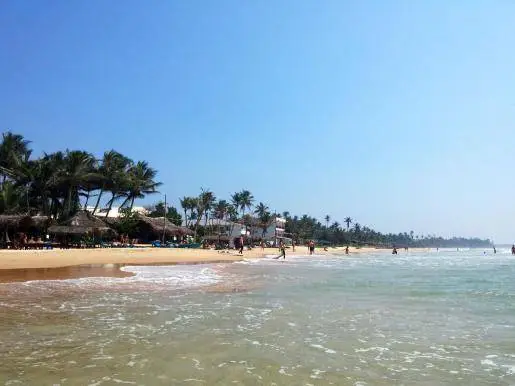
For a first winter, people often compare Hikkaduwa, Unawatuna, Mirissa, Weligama and the area around Galle. These are different scenarios, not a ranking:
- Hikkaduwa. A lively resort with shops, cafés, surfing, reefs, transport and many short-term rentals. It suits people who want services and social life, but check noise and sea conditions by street.
- Unawatuna and Galle. Useful for travellers who want a beach with access to a city, clinics and the historic centre. Check the distance from the road and tourist centre.
- Mirissa and Weligama. Fit travellers choosing the southern coast, surfing or a more compact rhythm. Check the real route to shops, markets and transport.
- Colombo. Not a beach winter, but a practical place for banking, medical, visa and work matters. Starting with a few days in the city can be sensible.
- East coast and hills. Choose them according to a different season and route. Nuwara Eliya and the highlands are cooler and are not a substitute for a beach climate.
For remote work, spend 7–10 days in the chosen area before paying for three months. Start with a week in Hikkaduwa or Galle, then compare other locations if needed.
Monthly housing: checks before payment
In high season, good coastal housing is booked quickly, but early booking does not prove that it works for daily life. Ask for a current video, a map pin, deposit terms and the complete list of payments. Confirm whether electricity, water, cleaning, internet and final cleaning are included, who pays for repairs and what happens during a power cut.
- Test Wi-Fi in the morning, evening and during a video call. Keep a mobile-data backup that works with your SIM.
- Check air conditioning or ventilation, mosquito screens, hot water, a kitchen, refrigerator, washing machine and desk.
- Visit the area in the evening: music, traffic, a temple, construction, generators and beach bars can matter more than the view.
- Put the term, deposit, meter readings, furniture and address in a written agreement. Do not send a large payment to an unknown intermediary before checking the property.
- If you use a guest house, homestay or agency, check the owner and terms. SLTDA lists registered hotels, guest houses, rented homes, apartments and homestays.
How much to budget
There is no honest single monthly figure. Housing, season, air conditioning, eating out, trips and car use change the result most. Plan in LKR and separate fixed costs, daily spending and an emergency reserve.
| Cost | How to plan | Check |
|---|---|---|
| Housing | Full rental plus deposit, electricity and cleaning | Exact address, season, internet and refund rules |
| Food | Local cafés are usually cheaper than tourist restaurants; cooking does not reduce every product cost | Menu, delivery, market, refrigerator and storage |
| Connectivity | SIM, internet and possible air-conditioning electricity | Coverage, limits, meter and backup power |
| Transport | Buses and trains for routes; tuk-tuks for short trips | Fare before departure, luggage, licence and insurance for scooters |
| Reserve | Doctor, replacement housing, urgent travel and visa extension | Card and cash access and insurance terms |
As an orientation, not a Hikkaduwa price list: Numbeo’s June 2026 Colombo sample shows about Rs 1,475 for an inexpensive meal, Rs 50 for a local transport ticket, about Rs 6,074 for broadband and about Rs 84,000 for a one-bedroom apartment outside the centre. These are user-contributed Colombo figures, not guaranteed southern-coast prices. Compare several listings for your dates and ask for the final amount in rupees.
Work, internet and daily routine
Remote workers should choose housing for more than its distance to the sea. Check sockets, power stability, calls, daytime noise and desk space. Keep a backup SIM and power bank, and store important documents online and offline. Sri Lanka is UTC+5:30, so calculate practical call windows for your team.
A tourist status does not replace a work permit. Do not accept local orders or provide services in Sri Lanka on a tourist ETA. If you work for foreign clients, study the Digital Nomad Visa and tax consequences instead of relying on the phrase “I only work on my laptop”.
Health and safety
Discuss vaccines and medicines with a doctor before travelling. CDC lists year-round dengue risk and recommends preventing mosquito bites; hepatitis A vaccination is recommended for unvaccinated travellers. Carry prescription medicine in its original packaging and check import rules. Buy insurance covering treatment and medical evacuation: outside major cities emergency care can be limited, while private treatment can be expensive.
Sri Lanka Tourism advises visitors not to treat tap water as safe to drink. Choose sealed bottled water and be careful with ice. In hot weather, pay attention to dairy, meat and prepared food, especially after a power cut.
The ocean and traffic require more care than a promise of a “safe resort”. Swim only when conditions are clear, follow flags and local warnings, and do not leave valuables on an empty beach. Agree a tuk-tuk or taxi fare before departure or use an app with a visible fare. Keep your passport and emergency money separately. The emergency ambulance number is 1990; contact your insurer promptly after a serious incident.
Families, solo trips and the first month
For a family, choose an area with short access to shops, a pharmacy and a clinic, but do not promise children daily swimming: depth, waves, currents and water quality vary. Bring sun protection, repellent, drinking water and a plan for the hottest hours. Solo travellers should share their address with someone at home, avoid unfamiliar dark streets at night and calmly refuse unwanted services.
A sensible first-month pattern is a few days to adapt and test daily life, two weeks in one area, then a decision about extending or moving. This reveals real noise, internet, weather, transport and costs rather than a listing’s promise.
Wintering in Sri Lanka works best when treated as ordinary life in another country, not as an endless holiday on a perfect beach. Check your status, choose the coast by season, test housing and connectivity, keep medical and financial reserves, and only then commit to a long rental. For a related remote-work perspective, see Live and work by the ocean.
Sources: Sri Lanka ETA — official portal; Department of Immigration — Tourist Visa; Digital Nomad Visa Category; Sri Lanka Tourism — Weather; Sri Lanka Tourism — Travel Tips; CDC — Sri Lanka Traveler View; SLTDA — registered tourism services; Numbeo — Cost of Living in Colombo, June 2026.