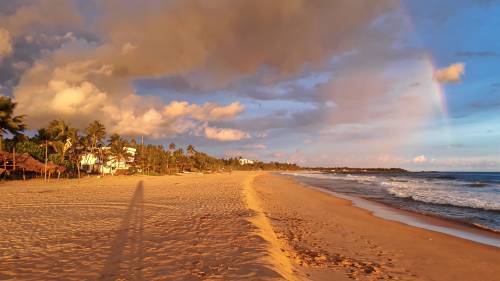
Sri Lanka, the beautiful island in the Indian Ocean, is an exciting destination for diving. Its landscape is as vivid and varied below the surface as it is on land. The waters are home to marine life ranging from blue whales to tiny nudibranchs. Around the island you can find coral areas, fish life and historic wrecks. Local divers continue to explore these waters, but a good dive is never guaranteed by a photograph or a general destination list.
Choose a dive area according to the month of your visit. October to May is commonly used for planning the west and southwest coast, while May to October often favours the northeast and east coast. These are broad seasonal patterns, not fixed operating dates: visibility, swell, current, rain and access to a particular site can change. Ask the dive centre for a local forecast and current conditions before booking.
Here are five well-known places for diving in Sri Lanka. They suit different goals rather than one universal ranking: beginner training, reefs, marine life and wreck exploration. A beginner needs an instructor or an introductory programme. Deep wrecks require the right certification, equipment and planning.
How to choose a place and dive centre
For a first dive, prioritise an easy entry, manageable depth, clear briefing and a simple return route. A certified diver may instead compare the reef, wreck, depth, current, bottom time and insurance requirements. Do not choose only because a centre promises “perfect visibility”.
Before the dive, a responsible operator asks about your certification, experience, health and last dive. The briefing should cover the route, depth, current, entry and exit, equipment and emergency plan. SLTDA guidance expects dive centres to have an emergency action plan and emergency oxygen, while insurance should cover diving risks and decompression treatment. Ask about communications, evacuation and medical support. If the answers are vague, postpone the dive.
1. Trincomalee
Trincomalee is one of Sri Lanka’s main diving areas. “Trinco” is a jewel of the east coast, and dive centres around Nilaveli and Uppuveli offer diving, snorkelling and swimming. White-sand beaches and clear water make the area attractive, while May to October is commonly used as the east-coast diving season.
Shallow sites can be convenient for an introduction, but shallow water is not automatically safe. Ask about waves, current, visibility, boat traffic and the exit point. Trincomalee also offers reefs and wrecks for experienced divers. Whale watching is a separate activity: an encounter with an animal during a dive cannot be promised.
The famous HMS Hermes lies off Sri Lanka’s east coast, but the Sri Lanka Navy’s shipwreck resource lists it at about 55 metres and as a technical dive. It is not a beginner site or an ordinary Discover Scuba Dive. It requires suitable certification, deep-dive experience, decompression planning and an authorised operator. Treat historic wrecks as underwater heritage: do not touch, remove objects or enter restricted areas.
2. Hikkaduwa
Hikkaduwa is one of the best-known diving areas on the southwest coast. This small town near Galle combines a holiday base with water activities. Sri Lanka Tourism mentions the coral sanctuary, small offshore islets, fish, turtles and several wrecks. Dive shops offer courses and equipment, but check each centre’s current programme and qualifications.
November to April is often used as the Hikkaduwa diving season. Shallow reef areas can suit beginners, while wrecks require more experience. Do not touch coral or animals, collect shells or artefacts, or feed fish. Surface conditions may look calm while current and visibility are different below.
Hikkaduwa’s practical advantage is infrastructure: you can compare centres, arrange equipment and combine a dive with a stay in town. Ask whether the price includes boat transfer, equipment, insurance, instructor and site fees. Confirm schedules and any temporary closures directly before travelling.
3. Unawatuna
Unawatuna is about five kilometres from Galle. Its coastal waters include coral reefs, wreck sites, fish and turtles; Sri Lanka Tourism also highlights the reefs around Rumassala. It is a useful base for combining diving with Galle and the southern coast.
The original article gives April to September as the best period, but southern-coast seasonality should not be treated as a hard boundary. A local centre must assess today’s wind, waves, visibility and current. The Rangoon wreck can remain part of the area’s diving story, but access, depth and route depend on the operator and conditions; it is not a promise for every visitor.
Beginners should focus on briefing and buoyancy control. Practise keeping fins away from the bottom and maintaining distance from the reef and animals. If you have not dived recently, tell the centre and consider a refresher. Depth and duration are limited by certification, air supply, group plan and actual conditions.
4. Kalpitiya
Kalpitiya on the northwest coast is known for coastal excursions, coral, a lagoon, dolphin watching and other water activities. Sri Lanka Tourism also lists diving in the area. Visitors come for a more natural coastal experience, not a guaranteed list of animals. Dolphins, whales, manta rays or sharks depend on season, route and chance.
The claims that Kalpitiya has Sri Lanka’s largest reef or that every dive will include reef sharks, whales and manta rays should not be presented as established results. Ask which site is available today, its depth, boat requirements, weather limits and likely seasonal wildlife. Never chase or touch animals or coral.
Kalpitiya is useful for comparing formats: snorkelling, a boat excursion and scuba diving answer different needs. Start with a beginner programme if you want a gentle introduction. For a series of independent dives, confirm certification, logbook, insurance and the physical demands of the day. Leave time to rest after a boat trip.
5. Kirinda
Kirinda is a small village on Sri Lanka’s southeast coast. On shore, visitors can see a temple on the rock and views of the Indian Ocean. The area is also connected with diving to offshore sites and expeditions around Basses Lighthouse. This is not a simple beach attraction: boat logistics, permissions, weather windows and team experience matter.
The original article names March and April as the best months, but for Kirinda it is safer to rely on a weather window confirmed by the operator. Calm water from the beach does not guarantee calm conditions at the dive site. Do not book a remote trip without confirmation or attempt a site beyond your certification.
Kirinda suits travellers who want marine history, underwater relief and a southern road trip. Respect maritime heritage: take nothing, break no coral and do not enter a wreck without specific permission and training. If conditions are unsuitable, the temple and coast remain worthwhile land-based parts of the visit.
Safety and responsible diving
For a Discover Scuba Dive, an introductory dive for a non-certified participant, SLTDA guidance calls for an instructor or divemaster and a maximum depth of 12 metres. Certified dives are governed by your training, plan and operator rules; the published guidance also states that dives deeper than 30 metres are prohibited within that framework. A historic wreck must never be assumed to be available to a tourist.
Before every dive, check the mask, regulator, BCD, cylinder, pressure gauge and weights. Agree on signals, minimum pressure, lost-buddy procedure, boat flag, safety stop and return route. SLTDA guidance specifies a safety stop of at least three minutes at 5 metres. Report symptoms, injury or sudden illness to the crew immediately and seek emergency medical help.
Maintain neutral buoyancy, do not touch coral, collect shells or artefacts, feed sharks or chase animals for a photograph. Choose an operator that explains environmental rules, maintains equipment and respects weather cancellations. Wind, rain and waves can cancel a trip; postponing is the correct safety decision.
Planning a trip
For a first dive, choose Hikkaduwa or a suitable Trincomalee programme, keep a spare day and avoid putting a long transfer immediately afterwards. Hikkaduwa and Unawatuna can work for reefs and turtles when conditions are confirmed. The east-coast season points towards Trincomalee, while Kalpitiya and Kirinda need separate planning for boats and weather. Do not try to visit all five areas in one holiday.
Before booking, ask what certification is required, who the instructor is, how large the group will be, whether equipment and insurance are included, what the depth limit is, where decompression support is located and what happens if weather cancels the trip. Bring your certification documents, medical information, sun protection and dry clothes. Do not dive after alcohol, when unwell or before recovering from a previous dive.
If diving is on your Sri Lanka list, start with an honest assessment of your experience and the conditions on the day. A good dive is not the deepest dive or the rarest photograph: it is a safe route, respect for the ocean and a return to shore ready to dive again.
Sources: Sri Lanka Tourism: diving and adventure sports; Sri Lanka Tourism: Trincomalee; Sri Lanka Tourism: Hikkaduwa; Sri Lanka Tourism: Unawatuna; Sri Lanka Tourism: Kalpitiya; Sri Lanka Navy: HMS Hermes; SLTDA: scuba diving and snorkelling guideline; SLTDA: registration for water operators.