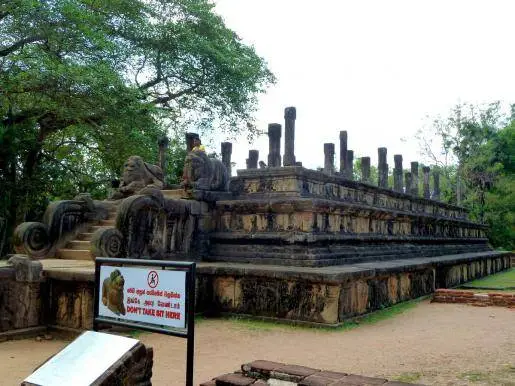
Cultural Triangle of Sri Lanka
The Cultural Triangle is not a separate administrative region but a useful travel name for a route through ancient cities and Buddhist monuments in central and north-central Sri Lanka. It brings together the enormous stupas of Anuradhapura, the ruins of Polonnaruwa, the rock fortress of Sigiriya and the cave temples of Dambulla. Between the headline sites are reservoirs, forests, smaller temples and villages, so the journey is about landscape and living culture as well as archaeology.
North of Kandy, the green hills of the central highlands gradually give way to hotter and drier plains. The ancient region was known as Rajarata, the “land of kings”. Today, “Cultural Triangle” helps travellers connect several different places on a map, but it does not mean there is one official boundary, one ticket or one set of visitor rules. Every monument has its own opening arrangements, entrance process and expectations for behaviour.
Decide what you want from the trip before building the route. If you have limited time, do not force Anuradhapura, Polonnaruwa, Sigiriya and Dambulla into one day: distances, heat and early closing times can turn the itinerary into a race. Three to five days is a more comfortable first visit. A driver is useful for several stops, while trains and buses work well for individual journeys if you check the timetable and allow extra time.
Anuradhapura: sacred city and enormous stupas
Anuradhapura was a political and religious centre of the island for many centuries. UNESCO describes it as a sacred city established around a cutting of the Bodhi tree, traditionally brought from India in the third century BCE. The archaeological area is not a single building but a large landscape of monasteries, stupas, ponds, palaces and ancient water-management works.
Allow at least half a day, and preferably a full day. The sites are spread out, so decide whether you will use a bicycle, tuk-tuk, private car or a combination. Ruwanwelisaya, Jetavanaramaya, Abhayagiri and Sri Maha Bodhi call for different kinds of attention: some are about scale and masonry, while others are about quiet and religious atmosphere.
Anuradhapura remains an active pilgrimage destination. Cover your shoulders and knees at sacred places, remove shoes where requested and do not treat worshippers in white as part of the scenery. Do not climb walls, touch relics or photograph people during prayer without permission. Mornings are more comfortable, but water, a hat and sun protection matter more than trying to see every corner.
Polonnaruwa: a compact city in the green
Ancient Polonnaruwa became an important centre after the Anuradhapura period. UNESCO lists it as an archaeological complex of temples, statues, palaces, pools and planned urban spaces. Compared with Anuradhapura, many key places are closer together, making it easier to follow a coherent route in one day.
Start with a map and choose your priorities: sacred buildings, the royal area, the museum or Gal Vihara, with its Buddha images carved from rock. Do not judge Polonnaruwa only by isolated photographs. The scale of the complex, the roads between ruins, the water and the vegetation are part of the experience. In hot weather, shade breaks are more useful than an overpacked afternoon.
Statues and temples deserve the same respect as active monasteries. Do not sit on pedestals or touch stone, and follow the photography rules at each shrine. Shoes and hats may be prohibited inside particular sanctuaries. Fees, access to individual areas and the condition of paths can change, so confirm current arrangements locally or with an official operator.
Sigiriya: rock, gardens and the climb
Sigiriya is an ancient complex on a high rock, known for palace remains, gardens, water engineering, frescoes and the Mirror Wall. It is one of Sri Lanka’s most recognisable monuments and a UNESCO World Heritage property. “Fortress” is a convenient shorthand, but the lower gardens and water system matter as much as the stairway to the top.
The climb requires reasonable fitness and a calm attitude to height. Check the weather, opening arrangements and official entry information before travelling; schedules and rules may change. Early morning is often more comfortable because of heat and visitor numbers, but a sunrise visit is not a promise of clear views. Good shoes, water, free hands and time are more useful than a heavy backpack.
Keep to your side on stairways, do not linger on narrow platforms and never cross barriers to overtake. Do not touch frescoes or other surfaces. Pidurangala and other viewpoints can be added nearby, but choose them according to your energy and the weather rather than only for a photograph. Sigiriya combines well with Dambulla or Polonnaruwa, although two major sites in one hot day will not suit everyone.
Dambulla and Mihintale: caves and pilgrimage
The Golden Temple of Dambulla is a living cave monastery with five sanctuaries, statues and murals. UNESCO highlights its continuous Buddhist ritual and pilgrimage tradition, so Dambulla calls for more than tourist curiosity. The climb can be tiring in the heat; follow the footwear rules and check signs or staff instructions before taking photographs inside.
Mihintale, near Anuradhapura, is associated with the history of Buddhism on the island. The hill has stairways, shrines and open viewpoints. It can be hot and windy at the top, so carry water, allow time and remember that parts of the route may be difficult for visitors with limited mobility.
Less-visited places when time allows
Travellers with a longer itinerary can add quieter heritage sites. Yapahuwa is known for its rock stairway and remains of an ancient centre; Aukana for a large Buddha statue; Aluvihara and Ridi Vihara for their Buddhist history and cave shrines. Ritigala and Arankele offer a different view of forest monasteries, but they require more planning for transport, footwear and the return journey.
Do not add a remote ruin simply because it looks attractive on a list. Check whether it is open, who manages access, whether a normal car can reach it and where you can get water or a signal. An offline map and a clear meeting point with your driver are useful for quieter sites. A stop without current information can take much longer than it looks on a map.
Nature and national parks
The heritage route can be combined with nature around Minneriya, Kaudulla or Wasgamuwa. Depending on the season, operators offer trips through protected areas where visitors may observe birds and other wildlife. A safari is never a guaranteed sighting: visibility, road conditions, accessible zones and rules depend on weather, park operations and the licensed operator.
Before booking, ask which park and route you will visit, who provides the vehicle, how many passengers will share the jeep and what happens if conditions change. Do not ask a driver to approach animals for a photograph, feed wildlife or let you leave the vehicle without permission. Check current guidance from the Department of Wildlife Conservation when a park is the main purpose of the day.
How to build the route
A classic multi-day route can start in Kandy, continue through Dambulla and Sigiriya, then include Polonnaruwa and Anuradhapura. Another order may be better if you arrive from Colombo or continue east. Kandy is close to the route but is a separate historic centre; not every attraction has to be counted as part of the “triangle”.
For two days, choose Sigiriya with Dambulla or Anuradhapura with Mihintale. For three to five days, add Polonnaruwa and one nature excursion. With a driver, agree in advance whether waiting, toll roads, parking and overnight stays are included. On public transport, check the timetable immediately before departure: old guidebooks and map estimates do not guarantee a current connection.
Early morning is usually the most comfortable time for active sightseeing. Leave a buffer for heat, queues, ceremonies and road delays. Do not buy a ticket or tour only because it promises that you will “see everything in one day”. A good itinerary leaves enough energy to pay attention instead of turning ancient cities into a sequence of rushed photographs.
Practical checklist
Before leaving, check opening arrangements, entry rules and the weather for every site. Bring water, sun protection, a hat, clothing suitable for temples, secure walking shoes and some cash for small expenses. Sigiriya and Mihintale involve stairs, Anuradhapura and Polonnaruwa involve distance between zones, and Dambulla requires respect for a living monastery.
The Cultural Triangle is best understood not as a compulsory list but as several ways to experience Sri Lanka: through ancient cities, religion, engineering, landscape and modern life beside the ruins. One carefully chosen ancient capital can be more rewarding than four places visited without a pause.
Sources: Sri Lanka Tourism: Cultural Heritage; UNESCO: Sacred City of Anuradhapura; UNESCO: Ancient City of Polonnaruwa; UNESCO: Ancient City of Sigiriya; UNESCO: Rangiri Dambulla Cave Temple; Department of Wildlife Conservation: official information.
Comments
Share your thoughts or ask a question about this article.