Sri Lanka seems to have been created especially for surf lovers. In practice, the island is useful because different coasts work better in different months. Sri Lanka has two broad surf seasons: from November to April, surfers usually look to the southwest (Hikkaduwa, Weligama, Galle, Koggala and nearby areas), while from May to October the east coast, including Arugam Bay and Pottuvil, is often the better planning direction. These dates are not a timetable: wind, swell, tide, rain and the individual break can change conditions every day. This guide keeps the most popular surf spots from the original article and adds a practical way to choose between them.
Choose the coast before choosing the break
Start by checking which coast is normally less affected by the prevailing monsoon during your dates. Sri Lanka Tourism describes alternating monsoons: during the southwest monsoon from May to September, the east coast, including the Arugam Bay area, is commonly chosen for drier conditions; during December to February, the southwest coast is often calmer. This is a planning pattern, not a promise of sunshine or waves. On a short trip, staying on one coast is usually more realistic than crossing the island every day.
Check the local forecast shortly before entering the water and ask a local instructor about the exact section of beach. Wave size, wind direction, rip currents, tide and reef exposure can differ between nearby breaks. A beginner should prioritise a sandy learning zone and qualified guidance. An experienced surfer should match the break to their skill, board and confidence in open water.
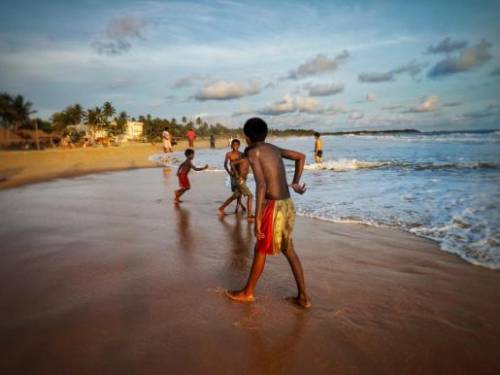
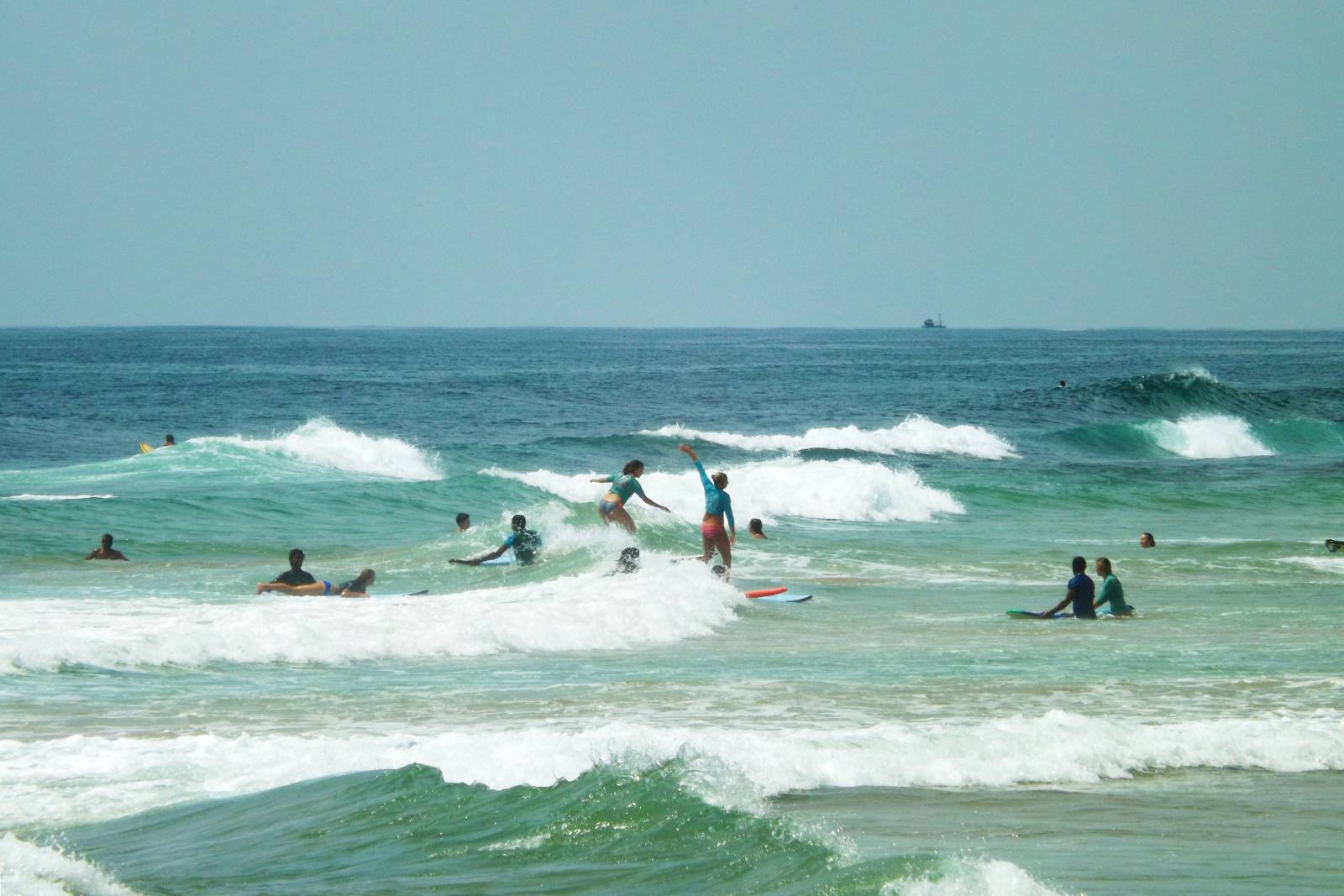
Surfing at Weligama Beach — a beginner-friendly starting point.
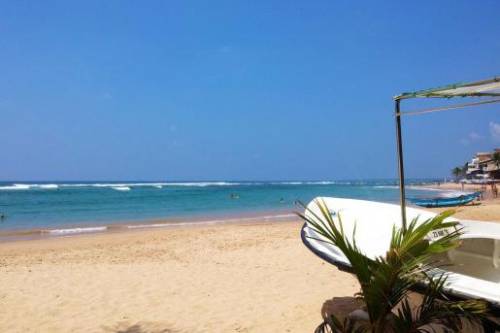
The best sandy beach for surfers is in Weligama. Weligama Beach is suitable for beginners as well as more advanced surfers. Its main season is usually described as late September to late May, when the southern coast more often offers workable learning conditions. You may still surf elsewhere in the island’s shoulder season if you choose the coast according to the weather and check the forecast. The island directly in front of Weligama is called Taprobane.
What is the best time to surf in Weligama? If you are a beginner and are still learning to catch a wave, the exact hour matters less than having an instructor and following the beach’s conditions. Protect yourself with sunscreen and suitable clothing. For a more experienced surfer, early morning, around 6–9 am, and the period after 5 pm until sunset can be comfortable because the wind and heat may be less demanding. Tide and actual conditions matter more than a universal timetable.
Weligama is a sheltered bay with a sandy bottom and long, gentle waves. It is one of the fastest-developing areas in southern Sri Lanka, with many surf schools and camps along the coast. The sandy learning area and access to lessons make it a convenient first base. Do not interpret that as a guarantee that strong surf, rip currents or other hazards never occur: conditions change after rain and with a new swell. Stay within the zone shown by your instructor and do not go far out alone if you cannot confidently return to shore.
What to check before a Weligama lesson
Ask where the learning zone is today, which board fits your size and level, how to recognise a rip current and what to do after a fall. Check the leash, board and water supply. A rash guard, water-resistant sunscreen and breaks during the hottest hours are more useful than trying to stay in the water all day. Keep space from other surfers, do not cross someone’s line and return to the line-up after your attempt.
Hikkaduwa — a versatile surf spot
Weligama is not the only popular place. Hikkaduwa is another well-known surf destination, suitable for first lessons as well as for surfers who already know how to handle a wave. It is convenient for combining lessons, independent sessions and resort life, but choose the exact section by ability rather than by the resort name.
Hikkaduwa is one of Sri Lanka’s main surf areas because it has several types of break and a developed tourist infrastructure. Conditions on the southwest coast change through the season, while reef and rocky sections demand better board control and a more careful entry. Smaller waves on a sandy beach may work for teaching, but the whole shoreline is not equally suitable. Before surfing independently, ask a school about currents, reef, safe entry and the boundaries of the beginner area.
The main road has many bars and restaurants where you can eat after surfing and watch the sunset. That is a practical advantage, not a safety guarantee or a promise about opening hours. If you need quiet mornings, choose accommodation away from the busiest road; if you want rentals, lessons and cafés within walking distance, the central area may be more convenient.
Arugam Bay: east-coast waves for the right level
Arugam Bay — one of the most popular surf destinations on Sri Lanka’s east coast.
It is a strong option roughly from April to October; Sri Lanka Tourism specifically lists the Arugam Bay surfing season as April to October. Weather and waves still vary within that period, so check the local forecast and the break on the day. The area has several known points, including Arugam Point and Crocodile Rock. Their character is different, and some waves can be too powerful for amateurs without enough experience. Do not transfer skills from Weligama’s sandy learning zone to a reef or more exposed break without preparation.
Another appealing feature is the quieter rhythm away from large cities. Arugam Bay still has hotels, cafés and restaurants for a comfortable stay. Stories about a large foreign community or visitors staying permanently are traveller impressions, not planning facts. Choose accommodation according to access to the break you need, road conditions and the possibility of reaching the water early.
Safety, schools and equipment
Surfing has real risks: falling onto the bottom or board, collisions, fatigue, sun exposure and rip currents can happen even in small waves. Before a lesson, discuss the conditions, the emergency response and where to leave the water. Sri Lanka’s SLTDA guidance for water-based operators points to an ISA Level 1 instructor qualification and a recognised lifeguard award, as well as risk assessment and an emergency action plan. This does not replace your own judgement. If the instructor cannot explain the rules or conditions deteriorate, postpone the session.
Beginners should start with a lesson rather than simply renting the shortest board. A soft learner board is forgiving, but the instructor should choose its size. On reef or rocky bottoms, ask whether reef shoes are appropriate. Never dive head-first, and do not hold a board in a way that can strike another person. Use a leash when the school recommends it, leave the water during lightning or a storm, and stop when visibility, energy or control becomes poor.
A short trip plan
For a first trip, choose Weligama and allow several days for lessons: one good forecast does not guarantee an easy wave on the day you arrive. If you want surfing with resort infrastructure, consider Hikkaduwa and ask which sections match your level. For the east-coast season, choose Arugam Bay, but be ready to select the break more carefully and assess your ability honestly. In every case, leave a spare day because the ocean does not follow a tourist timetable.
Before every session, check the forecast, tide and local school advice; inspect the board and leash; apply sun protection; tell someone on shore where you will surf; and leave the beach clean. This checklist cannot make the ocean predictable, but it helps you decide with less unnecessary risk.
Sources: Sri Lanka Tourism: beaches and coastal seasons; Sri Lanka Tourism: weather and monsoons; Sri Lanka Tourism: surfing; Sri Lanka Tourism: Arugam Bay; SLTDA: surfing, bodyboarding and paddleboarding guideline.