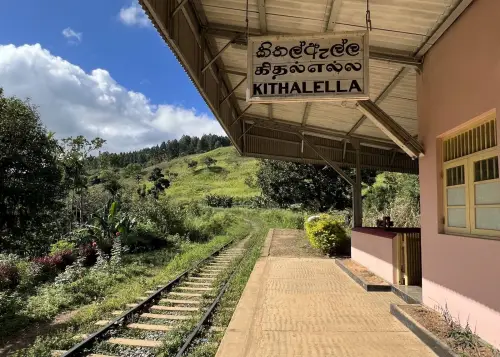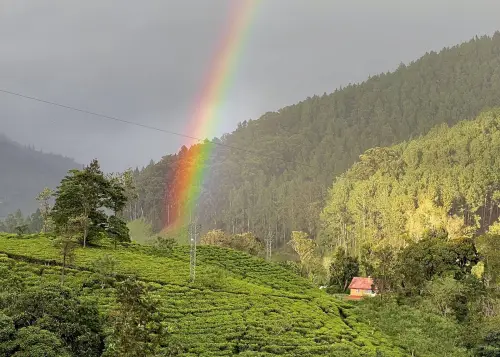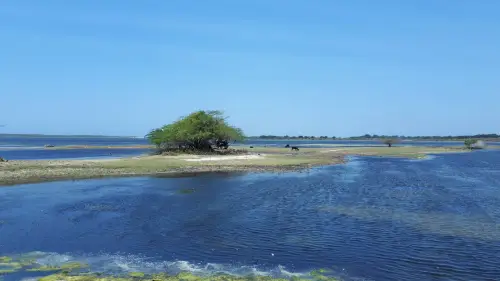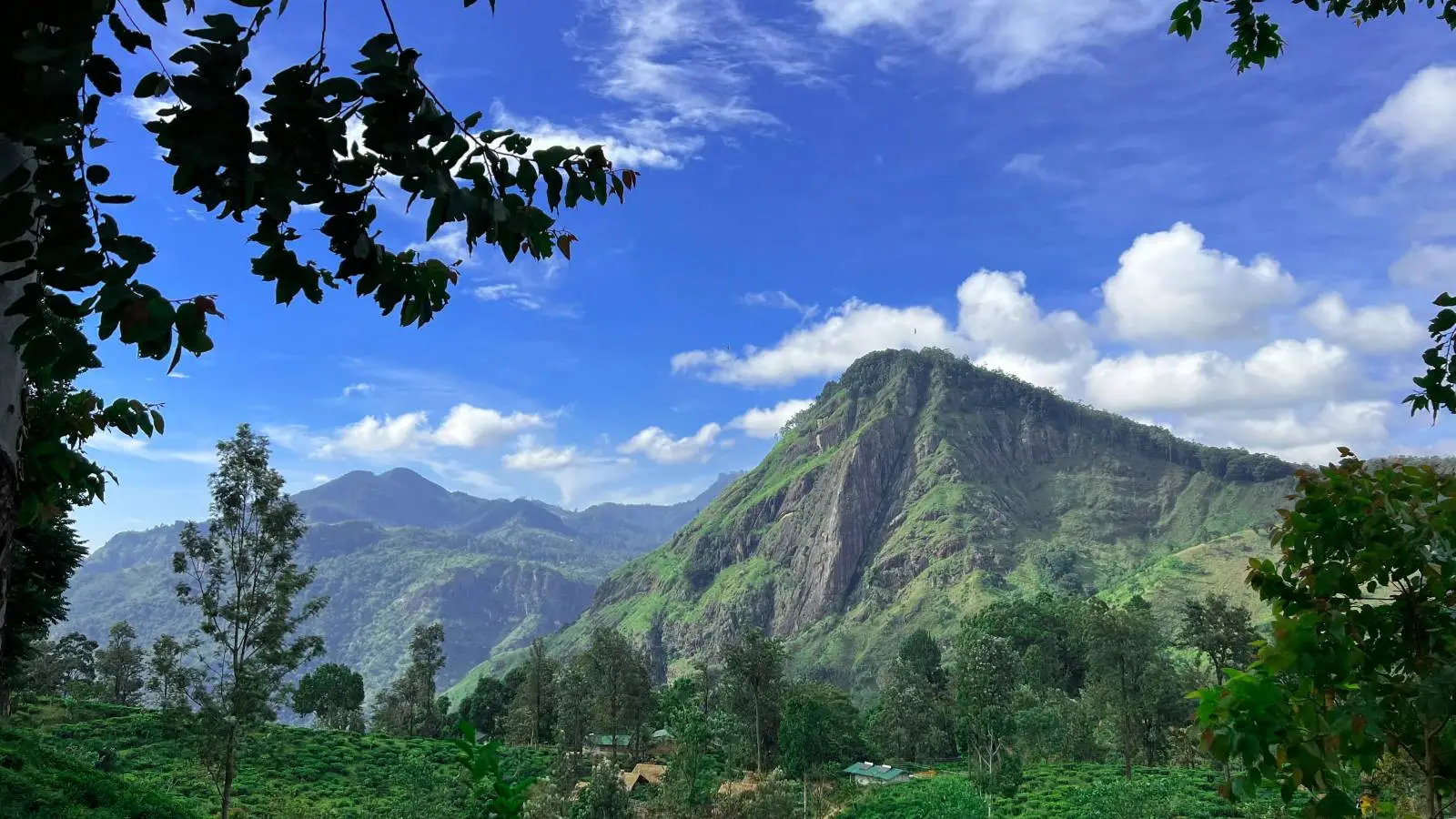
After our roughly three-hour journey from Nanu Oya, we entered a completely different world. It was warmer, and we were surprised that one trip could move us from one climate to another so easily. Ella was still surrounded by mountains and green hills, but the warmth made the place feel welcoming. We wanted to walk around and see as much of it as possible.
I do not know why Ella and Nuwara Eliya are so often presented as identical stops in tours. They are different towns, with different climate, architecture, atmosphere and activities. What they share is the hill country and tea areas. Ella is a useful base for short walks, waterfalls, the bridge and tea landscapes. Mountain weather changes quickly, so a description online cannot guarantee a view or a dry trail.
Ella is a small hill-country base surrounded by hills, cloud forests and tea plantations. Sri Lanka Tourism describes its cooler climate and the views through Ella Gap towards the southern plains. Midday sun can be strong, evenings can need a light jacket, and rain can change a plan within minutes.
Places to see around Ella
The old list included a cave, an ancient temple, a spice garden, two waterfalls, Nine Arch Bridge, tea factories, Little Adam’s Peak and Ella Rock. It is a useful orientation, not a ready-made itinerary. Some places need transport, some require a climb, and opening hours or weather may affect the visit.
- Little Adam’s Peak is a relatively short walk with views over tea slopes and Ella Gap.
- Nine Arch Bridge is interesting as an engineering landmark and walking destination. Watch trains from an allowed place rather than standing on the tracks.
- Ella Rock needs more time, fitness and route awareness than Little Adam’s Peak.
- Ravana Falls is beside the road towards Wellawaya. Water, wet rock and steps do not automatically make it safe for swimming or climbing.
- A tea factory is a separate visit. Confirm opening hours, entry conditions, cost, tasting and photography rules before going.
Ravana Falls: beautiful, but not a place for experiments
When we arrived, we decided to visit Ravana Falls. We had about two hours before sunset and thought we could make it. We took a bus from the centre towards Wellawaya, along a winding road. Near the waterfall, people approached us with stones supposedly offered as gifts. We did not want anything, but the conversation still became uncomfortable. If strangers insist on a “free” item, decline calmly, do not take out your wallet and move towards a ticket area, driver or other visitors.
The waterfall itself was genuinely beautiful, with water descending in steps along the mountain. In the old story, local people and tourists were bathing below while we took photographs. That should not be turned into a universal recommendation. Follow signs, barriers and current local instructions. After rain, the flow increases, rocks become slippery and the depth and current can change.
We also had an experience that is better kept as a warning, not a tutorial. We climbed higher over smooth rock, almost vertically, using a vine. At first it seemed easy, but later we realised that a slip could cause a serious fall. The view was beautiful, but getting down caused real panic. Do not copy this for a photograph: stay on marked paths, avoid wet ledges and never use random plants as climbing equipment. If the route is harder than expected, turn around while there is still daylight.
We eventually got down and bathed lower on the waterfall. That is a personal memory, not proof that the water is safe today. With children, strong flow or recent rain, skipping the swim is the sensible choice. Return from a natural site before dark because mobile coverage, transport and help on a mountain road are not guaranteed.
Little Adam’s Peak
We set out for Little Adam’s Peak early in the morning. Our relaxed walk took about an hour and a half, but personal timing is not a schedule for everyone. A scenic path leads to steps near the top, and the views make you stop every few minutes. Tea plantations look like a curly green carpet, with mountains and Ella Rock in the distance.
Start early, bring water and sun protection, and wear shoes with good grip. Clouds can remove the view and rain can make steps and soil slippery. Do not approach an edge for a photograph or assume that a busy trail has rescuers.
Nine Arch Bridge
You can combine a hill walk with a route to Nine Arch Bridge. On our trip we missed a downhill path and lost time because we wanted to photograph a train. The train was late, and we heard it only while walking back. This is a good reason not to build the whole outing around a precise moment: schedules change, and a safe viewing point matters more than the perfect frame.
Ask your accommodation or a qualified local guide about the current path. Do not walk on the railway, stand on the bridge in front of a train or enter closed areas. Sri Lanka Railways publishes schedules, but works, weather and restrictions can change them, so check for your date.
Ella Rock, caves and tea factories
Ella Rock may look like the natural next step after a short walk, but it requires more effort. The route may be unclear, the ground uneven and clouds can hide landmarks. Go in daylight, tell someone your plan, do not rely only on your phone and consider a qualified local guide when the route is unfamiliar. You do not have to climb Ella Rock if the view from Little Adam’s Peak is enough.
A cave, ancient temple and spice garden can add history and local life to a nature-focused stay. Check what is open and how to reach it: older guides sometimes mix up attractions and distances. Do not judge tea factories only by an old price; compare the programme, transport and duration of the visit.
Climate and seasonality
Ella is in the hills, where conditions differ from the coast. Sri Lanka Tourism describes March–April as a commonly useful period for the hill country, notes stronger southwest monsoon influence on the west and hills from May to September, island-wide showers in October and November, and a different monsoon pattern from December to February. This is a climate pattern, not a promise of sunshine on a particular morning.
Put your main viewpoint walk in the first half of the day, leave time for rain and do not schedule a waterfall or long trail immediately before an evening transfer. A rain jacket, phone cover, water, light jumper and dry clothes are useful. Check official weather information and local warnings before setting out.
Getting there and choosing accommodation
Ella can be reached by train through the hill-country line. Sri Lanka Tourism describes rail connections with Colombo and Kandy, while Sri Lanka Railways provides schedules and reservation services. A scenic train ride does not guarantee an on-time departure or a free seat in your preferred class. Check the route for your date and keep a road alternative in mind.
By road, buses travel through Ella Gap towards Wellawaya, where you can connect to other destinations. Rain, repairs, traffic and stops change the journey time on winding roads. Do not leave a tiny gap between a bus, a train and a prepaid tour.
The town is spread along roads and slopes, with shops, small restaurants, hotels and guesthouses in the centre. Check the slope to the property, road noise, water, internet, electricity, luggage storage and cancellation terms. The old article listed rice-and-curry and room prices, but those figures are no longer a useful guide. Compare the full price for your dates.
One-, two- and three-day plans
- One day: Little Adam’s Peak early, a safe route to Nine Arch Bridge, lunch and one short additional stop. Add Ravana Falls only with time and suitable weather.
- Two days: town and one easy walk on day one; bridge, tea factory or waterfall on day two after checking access. Treat Ella Rock as a separate effort.
- Three days: keep one flexible day for weather, a longer trail, the waterfall or a slower tea-country experience. Do not fill every morning with attractions.
Before leaving, check the forecast, road and trail conditions, sunset time, return transport, water and site rules. Wear modest clothing at temples, keep away from railway tracks and follow barriers and local instructions at waterfalls. If you are choosing between one more attraction and a time buffer, the hills usually reward the buffer.
Ella remained a mountain jewel for us not because every attraction was perfect, but because it combines roads, green slopes, small adventures and pauses so easily. Come for the views and atmosphere, but do not turn a personal risky episode into advice. A good walk ends with a safe return before dark, and no photograph is worth an injury.
Sources: Sri Lanka Tourism — Ella; Sri Lanka Tourism — Ravana Falls; Sri Lanka Tourism — climate and seasons; Sri Lanka Railways — schedules and fares; Sri Lanka Railways — reservation stations; Sri Lanka Tourism — travel tips; SLTDA — Ella tourism plan and pedestrian safety. Recheck weather, schedules, access, opening hours and trail conditions before travelling.