Travelling to Sri Lanka with children
Sri Lanka is possible with children, but a family holiday needs a slower plan than a regular beach trip. Decide in advance where to stay, how long you can spend on the road, what your child will eat and drink, what belongs in the medical kit and which activities fit your child’s age. The island is varied: transfers between beaches, hills and heritage sites can be long, while heat, rain and waves need attention.
This is practical travel information, not a medical opinion or a promise of safety. Discuss the itinerary with a doctor, check entry requirements and ask the carrier about a stroller, car seat and medicines. Start earlier if an infant or a child with a chronic condition or additional needs is travelling.
Choose the pace, not the whole island
A baby does not make the trip impossible, but it limits the pace. Infants may need familiar formula, clean bottles, a safe sleeping place and quick access to shade. Preschool children need short walks, naps and predictable food. School-age children can enjoy a safari, train ride or temple with breaks, but several long transfers in a row are tiring.
For a first family trip, choose one main area and add two or three short excursions. Check real travel times, not only map distances: mountain roads, traffic and child-friendly stops make journeys longer.
Accommodation and transport
Choose accommodation with shade, mosquito screens or air conditioning, hot water, a fridge for essential food and a safe sleeping arrangement. Ask about balcony and stair railings, pool barriers, exposed sockets, lifts and a nearby pharmacy or clinic. Do not rely on photos alone.
A private car with a driver and flexible stops is often easier for a long transfer. If you need a child seat, confirm the actual size and installation before travelling. A tuk-tuk can suit a short ride but is not a replacement for a proper child restraint. Trains and buses can be memorable, yet a stroller, luggage and a baby require extra planning.
Vaccines and the medical kit
It is not accurate to say that children need no additional vaccination for Sri Lanka. Advice depends on age, routine vaccines, itinerary, season, health and departure country. CDC advises travellers to be up to date with routine vaccines and to discuss travel vaccines such as hepatitis A; international travellers should pay particular attention to measles protection. A doctor should make the individual decision.
Start at least a month before departure, or earlier if a course requires several doses. Bring familiar medicines in original packaging, an extra supply, prescriptions and a list of active ingredients. Check import rules for prescription medicines in advance.
A family kit may include a thermometer, dressings, age-appropriate sunscreen and insect repellent, oral rehydration salts and anything your child uses on medical advice. Do not self-prescribe antibiotics or antimalarial medicines. Seek medical care for breathing difficulty, severe lethargy, dehydration, blood in stool, persistent high fever or a worsening condition.
Mosquitoes, animals and water
Mosquitoes are a reason for daily prevention, not for cancelling a trip. An adult should apply repellent to their own hands first and then to the child’s exposed skin; do not put it on the child’s hands or broken skin. Long sleeves, a bed net and closed windows can reduce bites.
Do not let children touch or feed unfamiliar dogs, cats, monkeys or other animals. A bite or scratch may require urgent assessment because rabies is a serious risk. Wash the wound with soap and water and seek medical advice quickly after any bite or saliva contact.
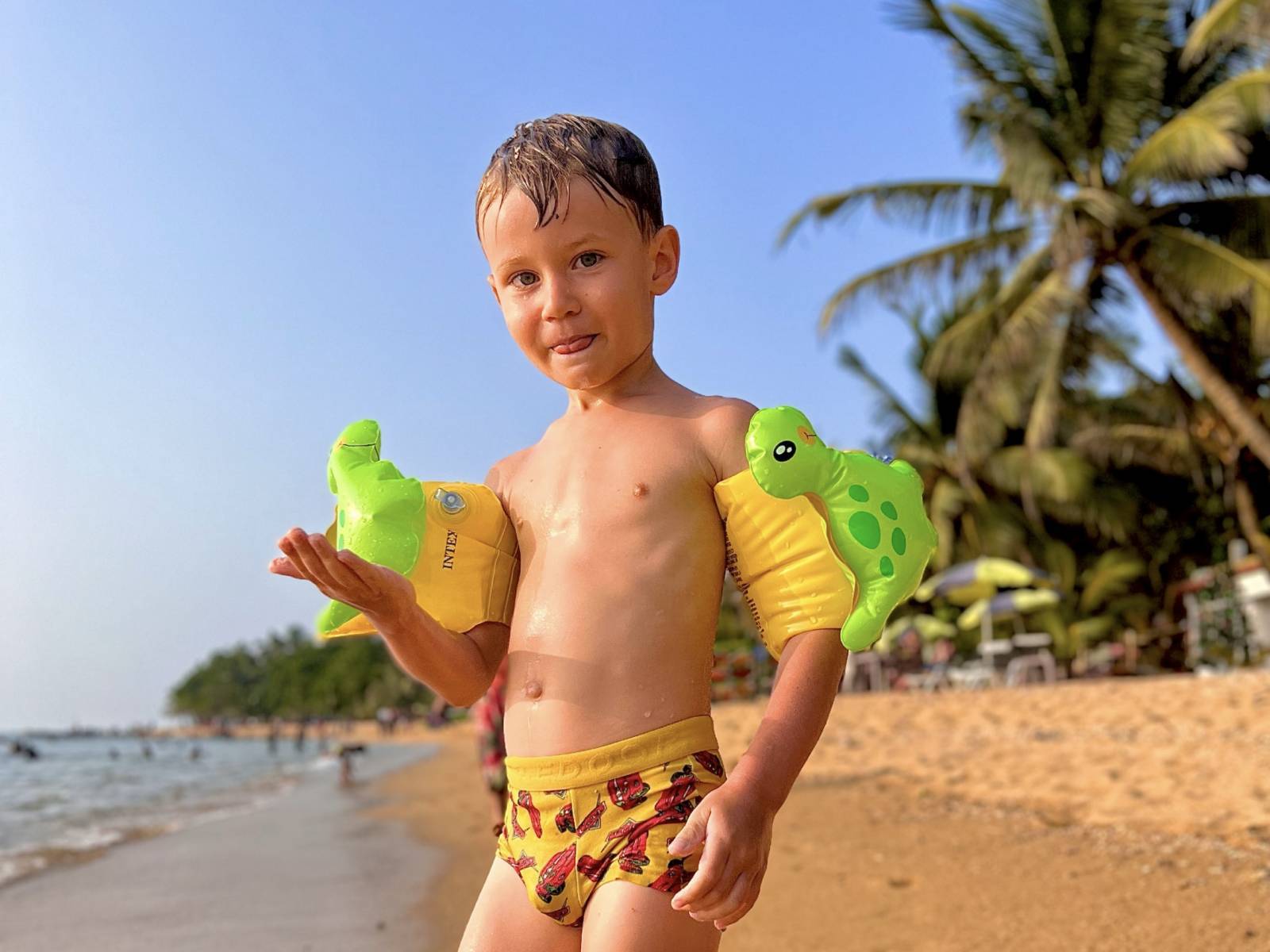
Swim only where conditions are suitable, obey lifeguards and flags, and supervise children continuously near water. Currents, sudden depth, rocks, marine animals and waves may not be obvious from the shore. Avoid untreated freshwater where sanitation is uncertain.
Food, formula and drinking water
Formula, nappies and children’s products are available in larger supermarkets and pharmacies, but a particular brand or size may be missing in a smaller town. If your child depends on one formula, bring enough for the whole trip plus a few extra days. Keep it in the original packaging.
For infants, use clean bottles and water that is safe for drinking and preparing formula. Factory-sealed bottled water is the simplest option; check the seal and avoid ice of unknown origin. Use the same caution for brushing a child’s teeth. A filter may be useful, but you cannot always verify its maintenance, so ask the host and use bottled water if uncertain.
Introduce unfamiliar food gradually. Choose hot, well-cooked dishes, wash hands and be cautious with raw salads, peeled fruit, undercooked meat and seafood. A child can often eat rice, plain noodles, bread, bananas or another familiar dish without spicy sauce, but no restaurant can be promised to be risk-free.
Sun, heat and the daily rhythm
Heat and humidity tire children faster than adults. Plan outdoor time for the morning or late afternoon, use shade and offer water regularly. Light covering clothing, a hat and age-appropriate sun protection help. Babies under six months should be kept mainly in the shade and protected by clothing; follow product instructions carefully.
One temple, a short beach visit and a nap may be better than four attractions with long transfers. Keep spare clothes, wipes, water, a snack, a bag for wet items and copies of emergency contacts in the day bag.
Packing list
- familiar formula, medicines and care products with a reserve;
- light clothes, a hat, sun protection and a thin rain layer;
- age-appropriate repellent, a mosquito net and closed shoes;
- a stroller if needed, after checking stairs and surfaces at the accommodation;
- a small first-aid kit, thermometer, oral rehydration salts and documents;
- passport and insurance copies, doctor contacts and emergency numbers.
A simple family plan
| Situation | Practical choice | Check first |
|---|---|---|
| Infant | One area, short rides and familiar food | Formula, water, sleep, clinic and heat |
| Preschool child | Supervised beach time, shade and one outing a day | Waves, sun, stairs and pool |
| School-age child | A safari, train or heritage site with breaks | Road time, animals, shoes and insurance |
| Stroller user | Ground-floor or lift-access accommodation and a suitable transfer | Steps, pavements, seat and luggage space |
Sri Lanka with children is realistic when you reduce the pace and keep alternatives. Do not assume perfect weather, no insects or equally easy roads everywhere. Prepare health and documents before departure, choose clear accommodation, watch water, sun and sea, and seek medical care if your child becomes unwell.
Sources: CDC Yellow Book — Sri Lanka; Sri Lanka Tourism — Travel Tips; Sri Lanka Tourism — Beaches; WHO — travel vaccines.
Comments
Read also
All articles
Sri Lanka Trains: Routes, Tickets, and Carriage Classes
A practical guide to travelling by train in Sri Lanka: scenic lines, carriage classes, current schedules and fares, reservations, luggage and connections.

Dengue in Sri Lanka: Symptoms, Prevention, and When to Seek Help
Dengue in Sri Lanka is not a reason to cancel a trip, but it is a reason to know the signs and not rely on…

The Most Interesting Tours in Sri Lanka: How to Choose a Route
A practical guide to choosing Sri Lanka tours: cultural sites, mountains, wildlife, beaches, custom guides, route length, and current checks.

Sri Lanka entry rules in 2026: ETA and documents
Current Sri Lanka entry rules: ETA, the 40-country free tourist regime, documents, fees, transit and visa extensions checked on 3 September 2026.
Sights of Sri Lanka. Where should you go?
Rich and diverse in both nature and culture, Sri Lanka is one of the pearls of South Asia. When you are planning your trip to…

How to Attract Customers Through Influencers in Sri Lanka: Using Promo Listings
A practical guide for Sri Lankan businesses and creators looking for relevant promotion partnerships.